
Goa Chitra Museum, A Must Visit Museum To Explore Goa’s Agrarian History
We all are familiar with the postcard version of Goa: the golden sunsets over pristine beaches, the rhythmic hum of beach shacks, the clinking of cold beer bottles, and the endless expanse of the Arabian Sea. There’s no doubt that we all love it, and whenever we plan a trip to Goa, a subtle excitement builds inside us. It’s always a sudden urge to let loose and experience life to the fullest, especially when it comes to Goa’s legendary nightlife.
For the longest time, that was my plan too whenever I sketched out a trip to Goa. That all changed when our local guide pointed us toward the Goa Chitra Museum—an evocative ethnographic museum nestled quietly amidst the lush, rural lanes of Benaulim.
I didn’t expect much more than a dusty collection of colonial relics. What I found instead was a deeply moving, beautifully curated, and profoundly sustainable testament to a forgotten way of life. It completely re-anchored my understanding of what Goa used to be before tourism and mining transformed its landscape.
Stepping through its gates wasn’t just a detour from the coastal heat—it felt like stepping directly into the living, breathing soul of traditional Goa. Here is my journey through this extraordinary sanctuary of history, along with everything you need to know to plan your visit.
Goa Chitra Museum: Essential Visitor Information You Must Note
Before diving into my personal experience, here is a quick overview of what the Goa Chitra Museum actually is:
Goa Chitra is a privately owned ethnographic museum complex located in Benaulim, South Goa. It was founded in 2009 by restorer, founder, and artist Victor Hugo Gomes and houses over 40,000 documented artefacts across three dedicated galleries. These galleries are Goa Chitra, Goa Chakra, and Goa Cruti. If you ever visit this museum in Goa, these three galleries will showcase Goa’s pre-industrial agrarian technology, traditional transport, and colonial material culture.
- Exact Address: House No. 498, St John the Baptist Church Road, Benaulim, Salcete, Goa 403716 (Google Map)
- Goa Chitra Museum Entry Fee: Any One Museum: INR 150 per person; Any Two Museums: INR 250 per person; All Three Museums (Recommended): INR 300 per person
- Light and Sound Options: It does not feature a light and sound show, and your entire experience will rely on live, deeply personal guided walks.
- Key Recognition: Rated by the Archaeological Survey of India (ASI) as the “topmost contemporary museum” in India.
- Recommended Time: Approximately 2-3 hours is enough for a complete walkthrough.
Stepping Into The Goa Chitra Museum: My Very First Impression
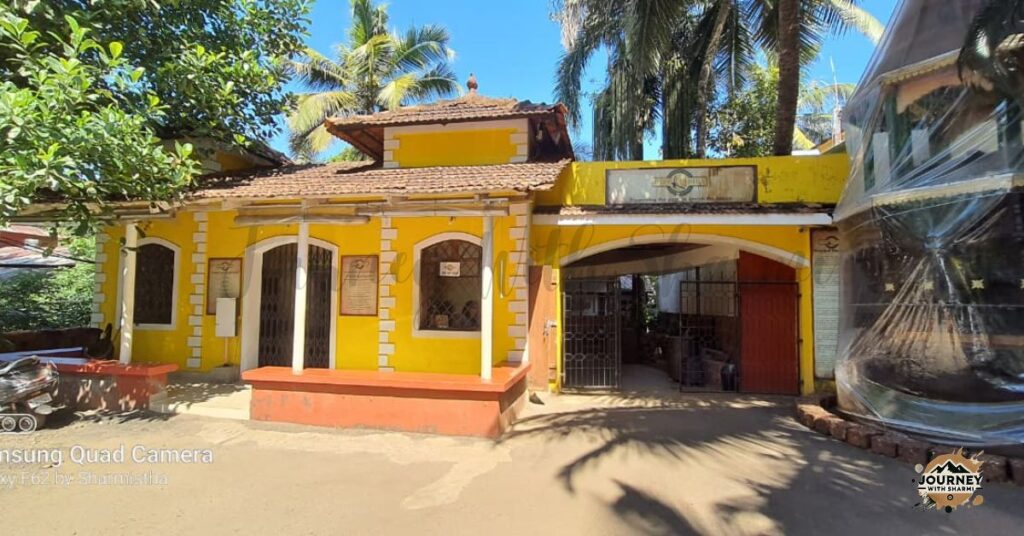
Tucked away along St John the Baptist Church Road in the serene village of Benaulim, South Goa, the Goa Chitra Museum greets you not with grand marble pillars but with lush greenery, reclaimed wooden archways, and an immediate sense of stillness.
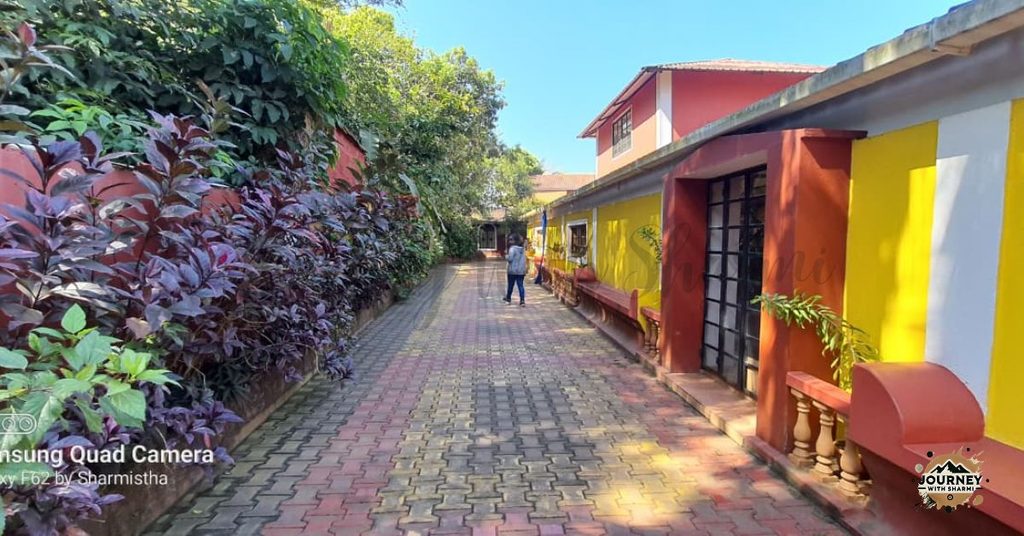
As I stepped onto the grounds, the sensory shift was immediate. The ambient noise of coastal traffic gave way to the gentle rustle of palm fronds, the earthy smell of wet soil, and the soft crunch of gravel underfoot. The museum complex itself is embedded within a working, organic farm—a deliberate design choice that grounds the entire experience in the soil.
What struck me before I even reached the first display was the architecture itself. The buildings of Goa Chitra are constructed almost entirely from salvaged materials. Doors, window frames, wooden pillars, and lintels rescued from over 300 demolished traditional Goan homes were lovingly brought here and reassembled. Walking through the doorways, it felt like I’m passing through portals of forgotten living rooms, kitchens, and ancestral courtyards.
The Visionary Behind The Dream Of The Founder, Victor Hugo Gomes
Victor’s deep connection to material history was sparked as a child living with his grandmother in Benaulim. Through her stories, he developed an understanding of how objects connect communities to their land and past.
As modern development swept across Goa in the late 20th century, Victor watched with sadness as ancestral homes were demolished and hand-carved wooden tools, stone grinders, and trade implements were discarded in favour of modern mass-produced materials.
After earning his degree from the Goa College of Art, he received a scholarship to study at the Lucknow College of Arts and Crafts. He went on to specialise in paper and manuscript conservation at the Indian National Trust for Art and Cultural Heritage (INTACH) Centre. Upon returning to Goa in 1991, he worked at the Museum of Christian Art before embarking independently to salvage abandoned artefacts across Goan villages.
Goa Chitra Is A Self-Funded Life Mission
Driven by conviction, Victor spent over thirty years travelling on foot, by bicycle, and by car to rescue abandoned items from scrap heaps and demolished ancestral manors. He interviewed elders, documented oral traditions, and catalogued the indigenous utility of every piece. Completely self-funded and built without government support, his collection grew into an archive of over 40,000 documented objects, opening to the public in 2009 as the Goa Chitra Ethnographic Museum.
Three Museum Galleries In Goa Chitra Museum
Goa Chitra is well organised into three distinct, interconnected galleries that trace the region’s socio-technological evolution:
Goa Chitra, Agrarian Roots & Pre-Industrial Engineering
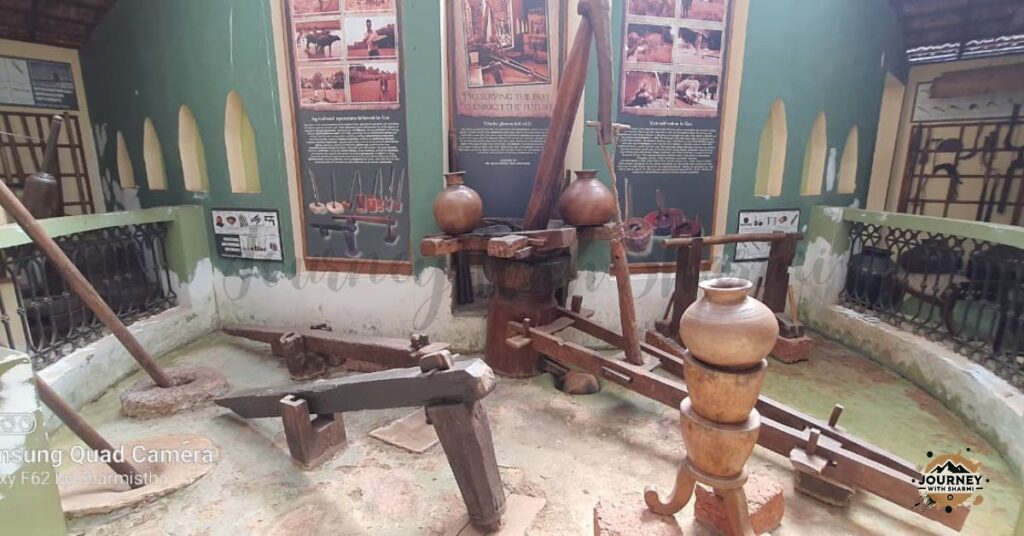
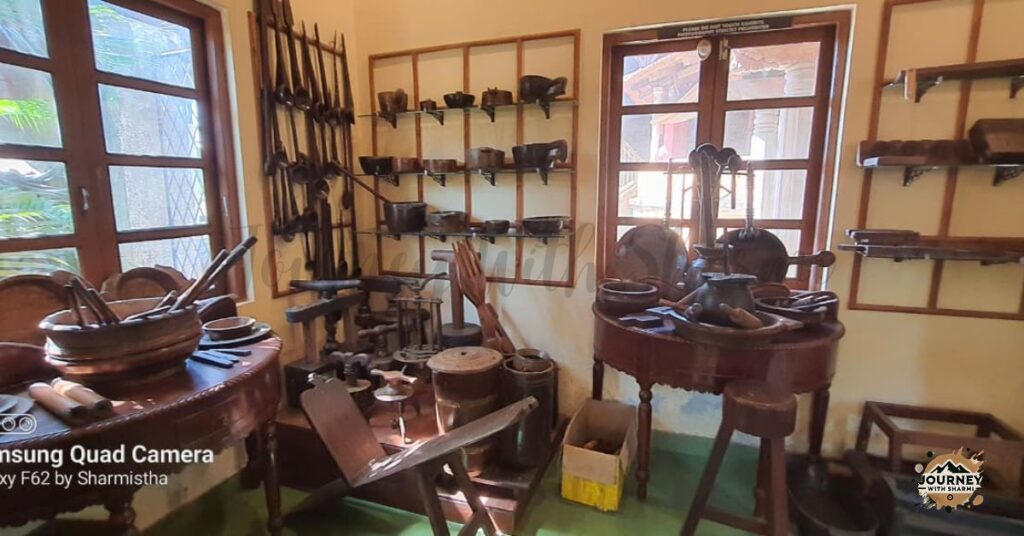
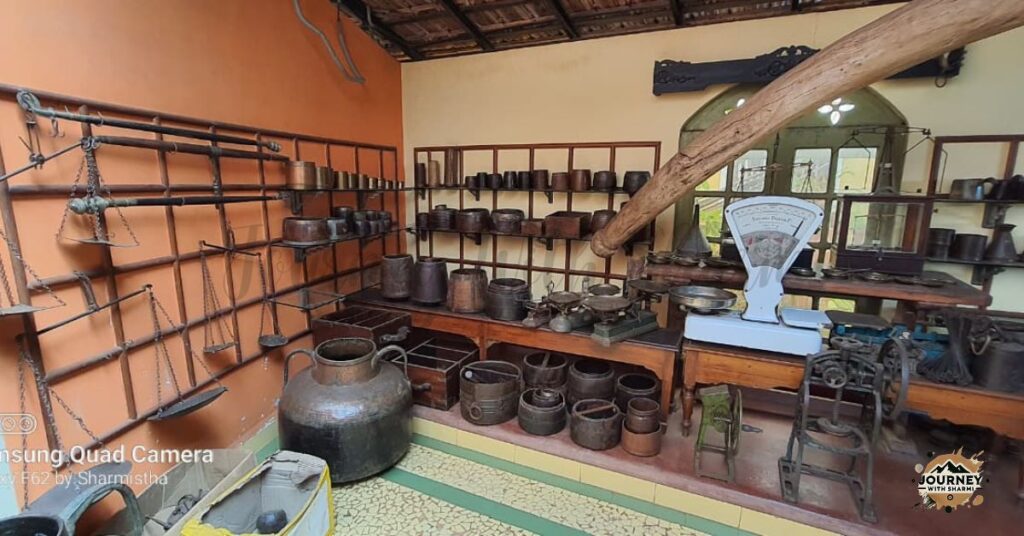
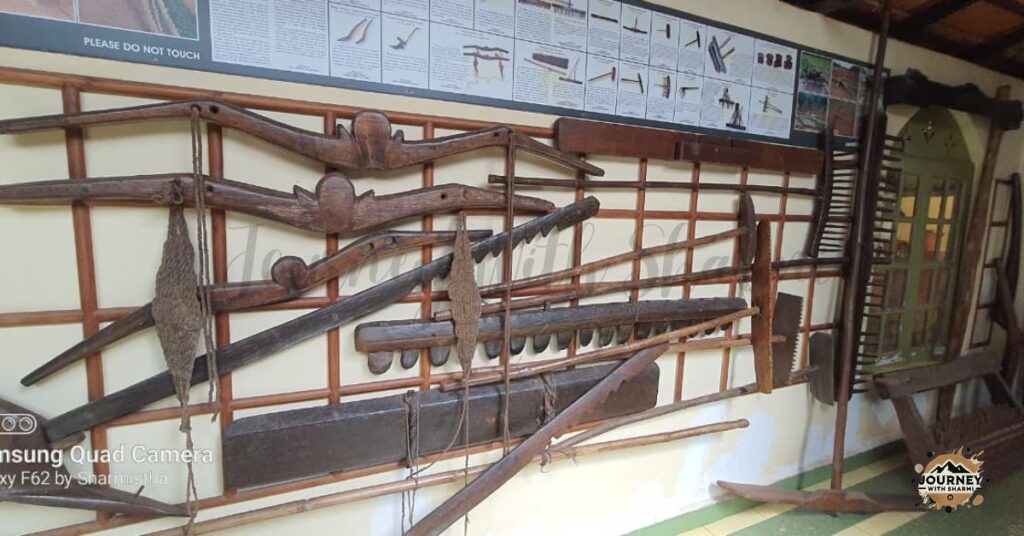
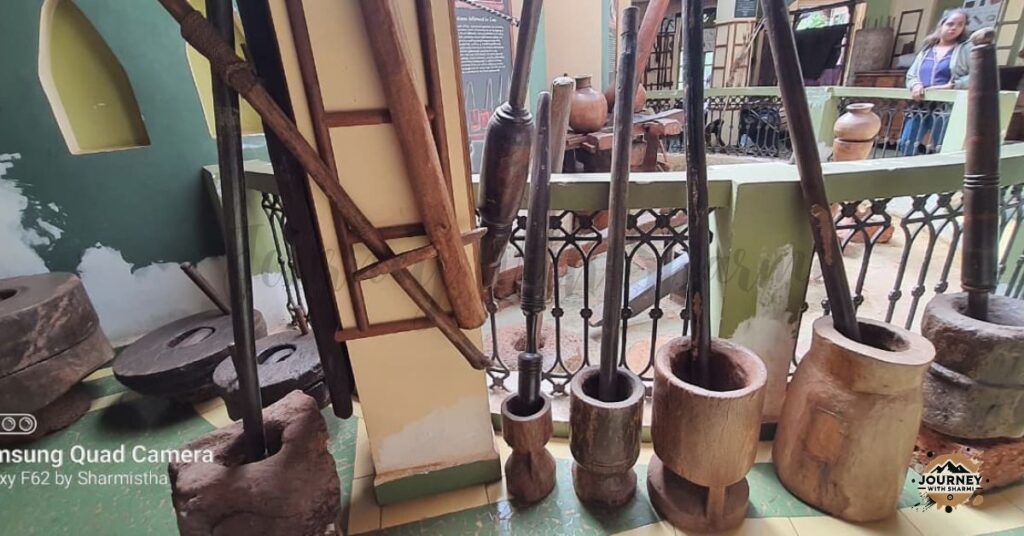
It is the primary hall, Goa Chitra, and it tributes to the agrarian heartbeat of ancient Goa. Long before tourism became this state’s economic engine, Goan life revolved around rice paddies, coconut groves, sugarcane fields, and local trades. I was completely spellbound by this flagship gallery, which highlights Goa’s agricultural roots and pre-industrial mechanical ingenuity. Right at the entrance sits the gallery’s centrepiece:
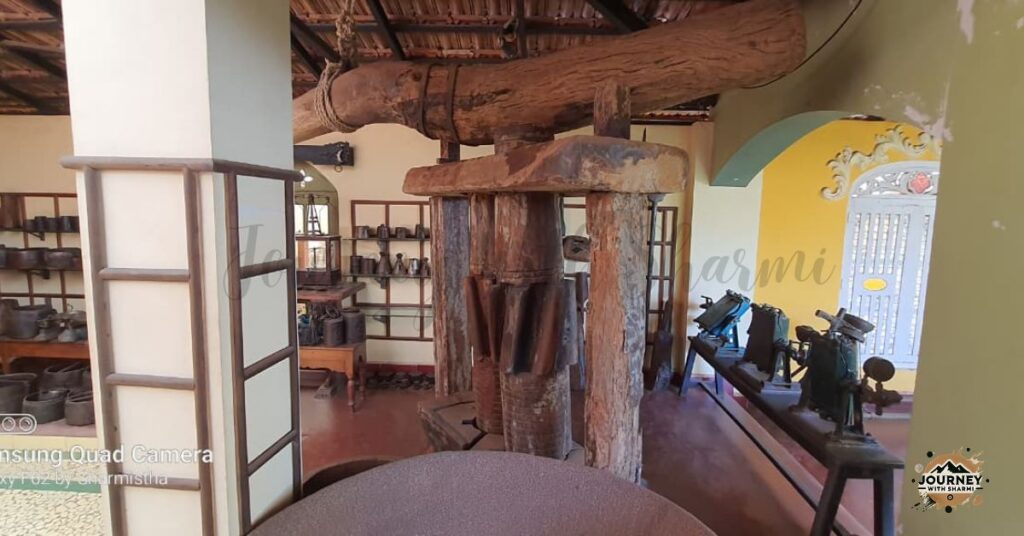
- The 5-Metre Sugarcane Crusher: Carved out of solid tree trunks, this massive 5-metre-high wooden crusher took Victor Hugo Gomes over two years of meticulous restoration work to bring back to fully operational life.
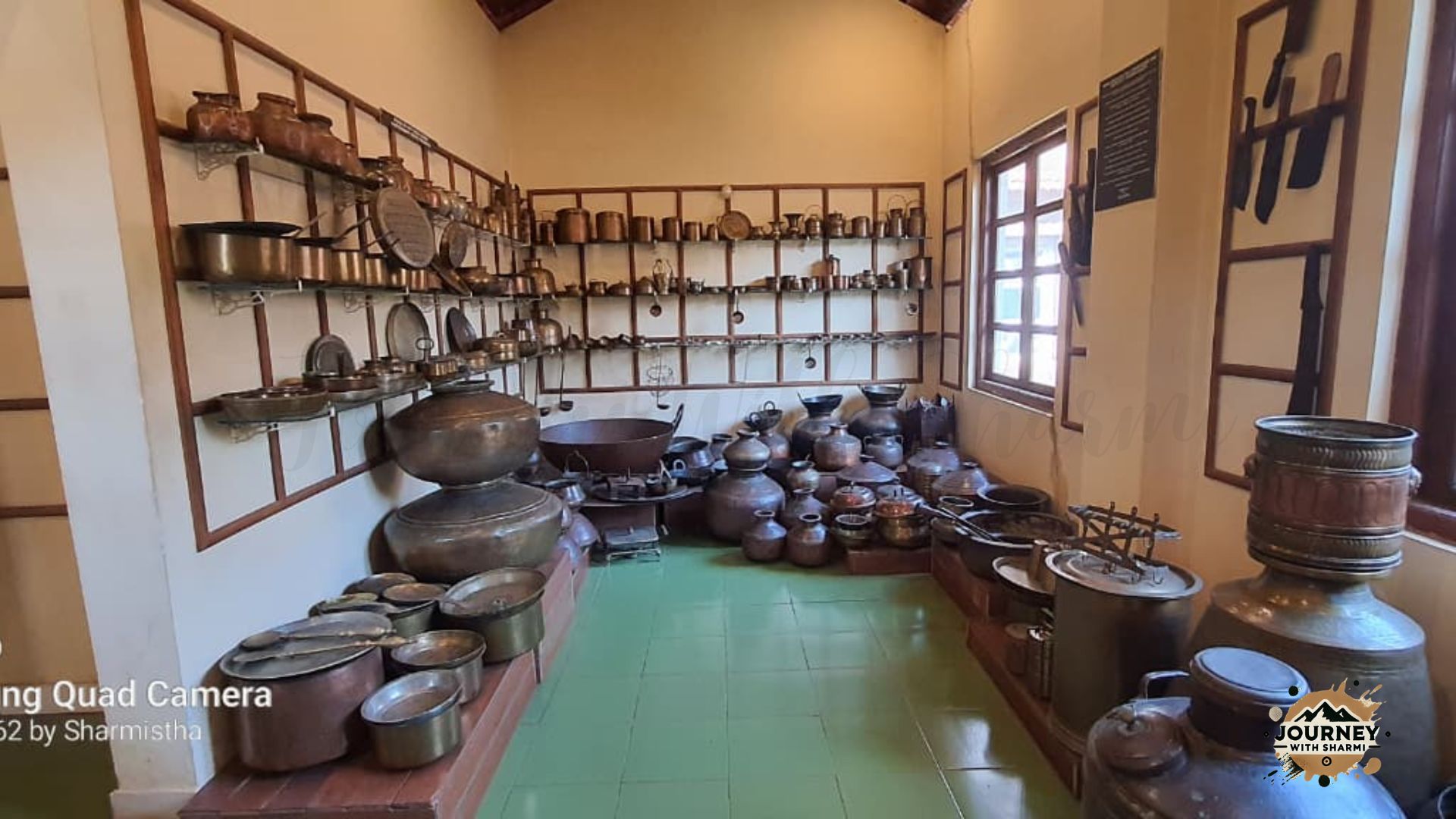
- Feni Distillation Apparatus: Comprehensive exhibits showcasing ancient copper pots, clay pipes, and collection vessels historically used for distilling Feni from cashew apples and coconut sap.
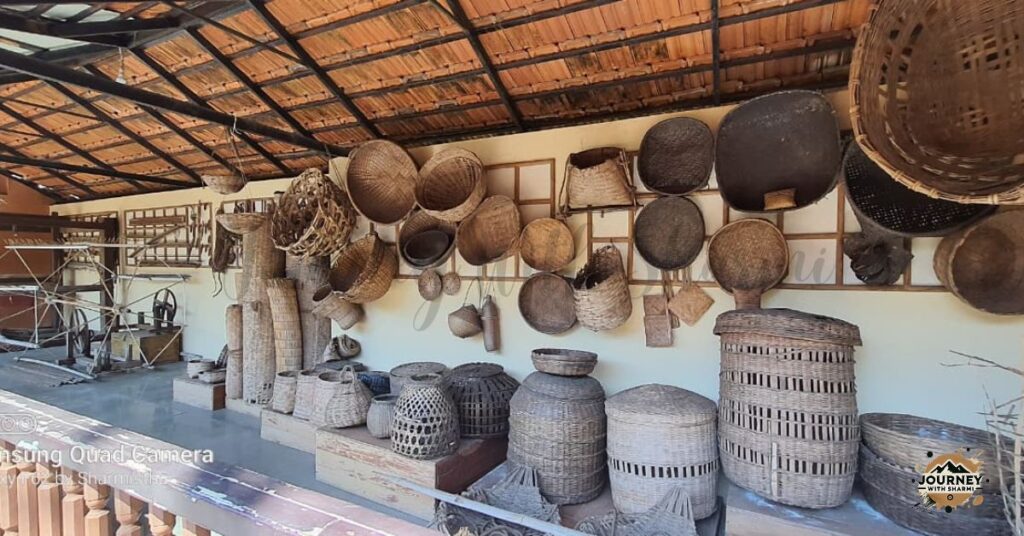
- Tillage & Harvest Tools: Hand-carved wooden ploughs, winnowing baskets, seed drills, grain storage vessels, precision weighing scales, and specialised paddy harvesting blades tailored to Goan soil.
- Domestic Implements: Ancient hand-operated stone grinders, coconut scrapers, terracotta water-cooling storage jars, and traditional oil presses (ghanis) powered by animal draft.
- The Coconut & Toddy Tapping Legacy: Toddy tappers (rendars) held a central role in Goan village life. On display are the specialised curved knives, leather waist harnesses, and clay/gourd collecting pots (gonnn) used to collect sap for local vinegar, jaggery, and palm feni distillery.
The Goa Chakra, The Evolution of Non-Mechanised Transport
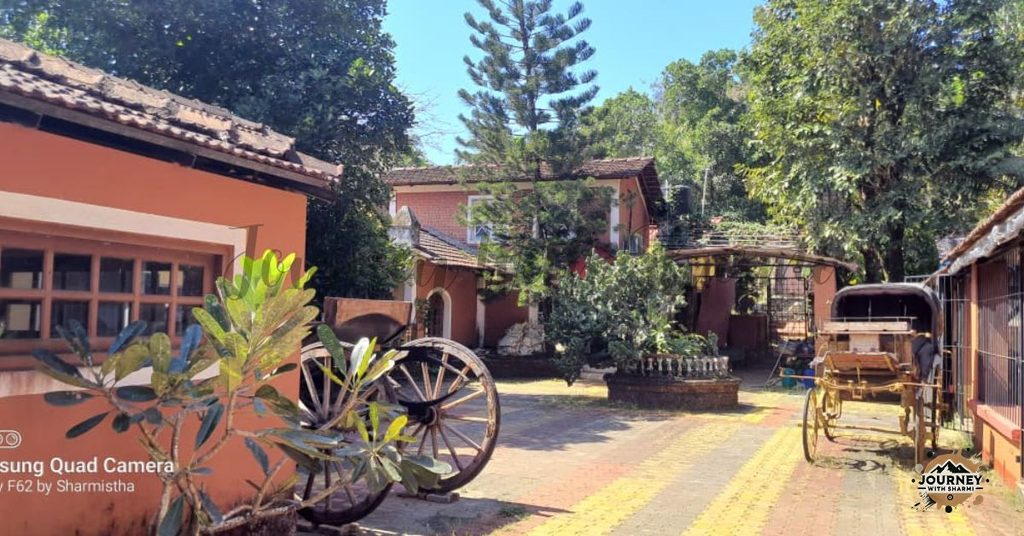
Next, my journey continued into Goa Chakra, a gallery dedicated to tracing human mobility prior to the combustion engine. Derived from the Sanskrit word for “wheel”, this wing captivated me with its incredible array of traditional, non-mechanised transport from throughout India:
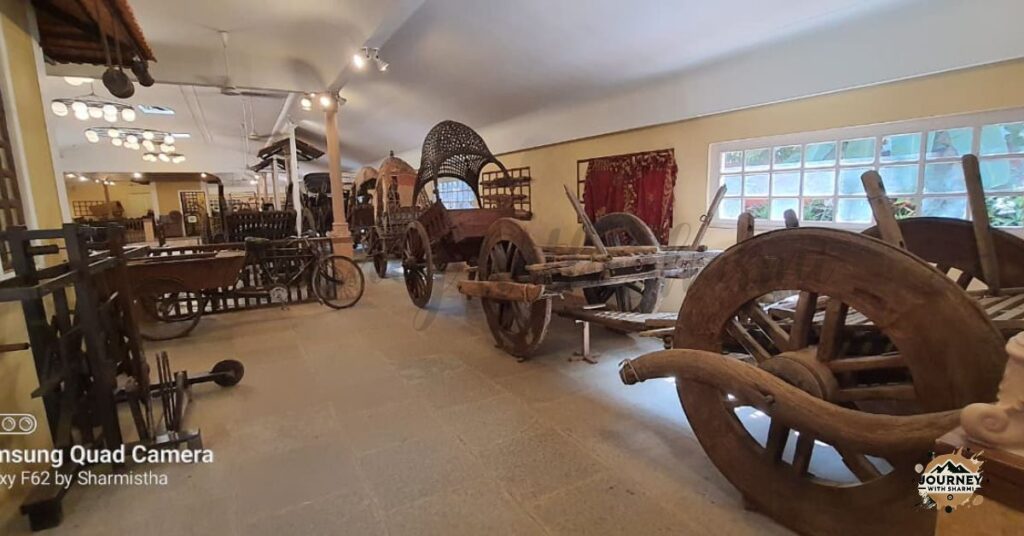
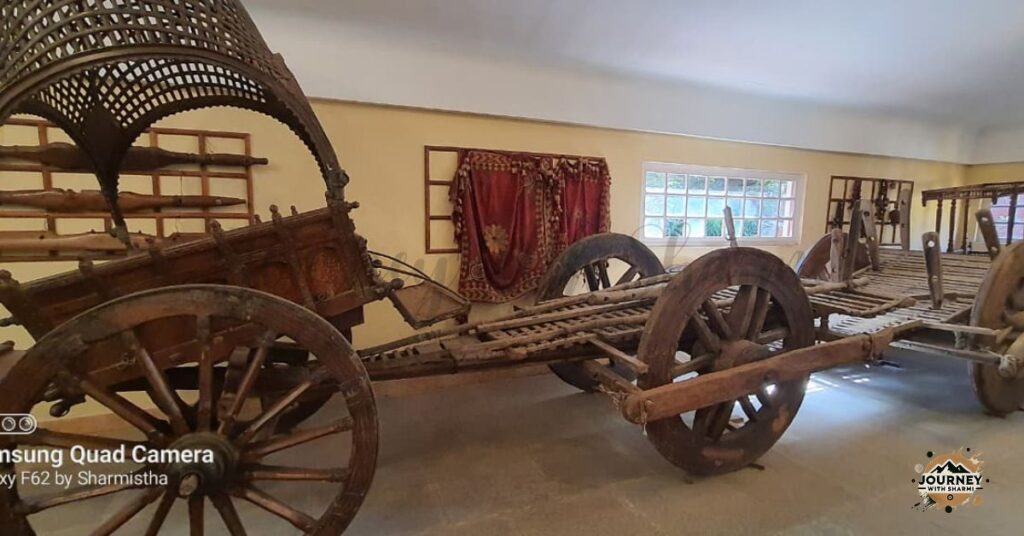
Walking into this vast hall feels like stepping into a historical transport depot:
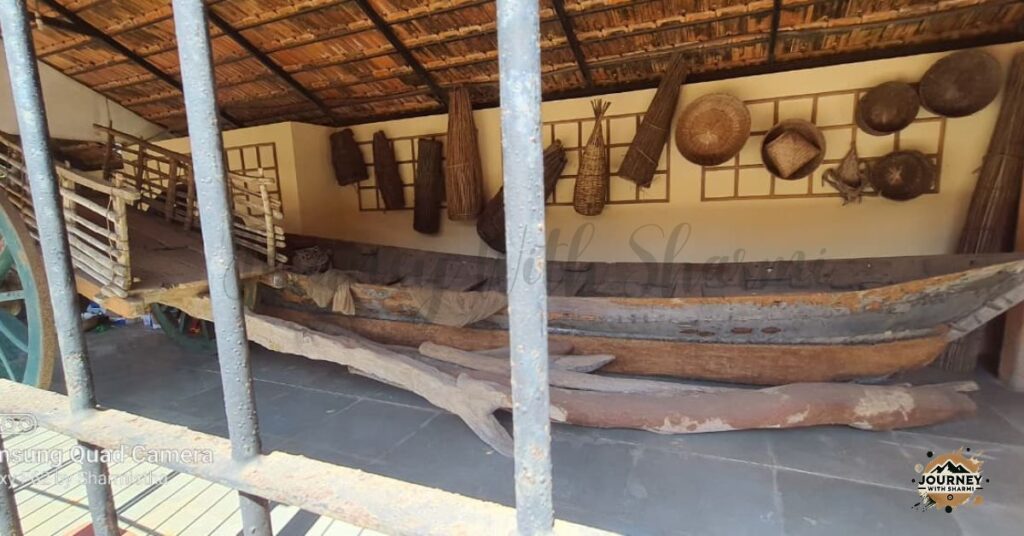
- Artisanal Bullock Carts: Intricately carved wooden bullock carts, painted parade carriages, and specialised agricultural harvest carts.
- Royal Palanquins (Palkhis): Covered hand-carried stretchers once used by Goan nobility, religious heads, and regional aristocracy.
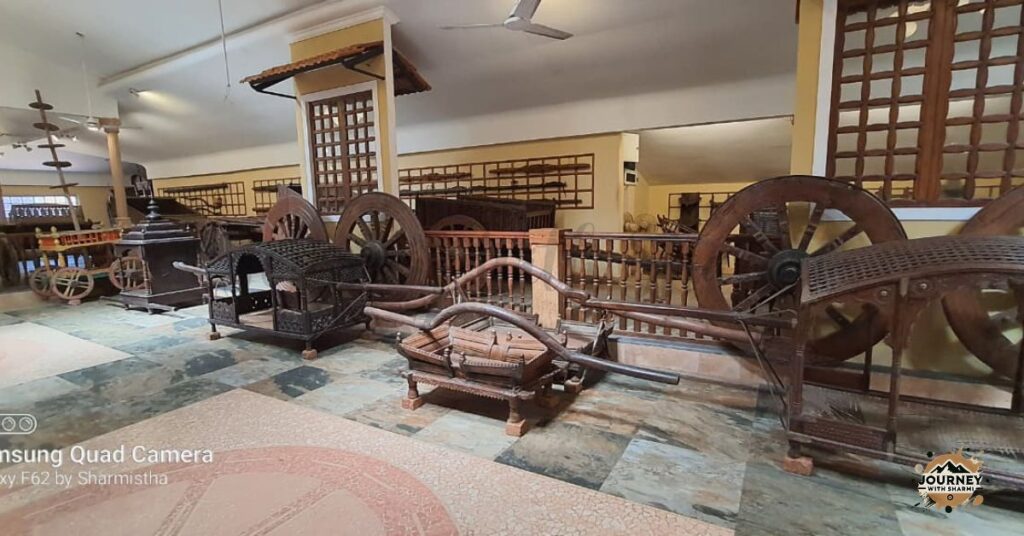
- Vintage Vehicles: Rare hand-drawn rickshaws, early wooden bicycles, postman carts, and trade delivery vehicles illustrating mobility across generations.
- Ancient Carts & Buggies: Displays include hand-crafted bullock carts from various Indian states, heavy wooden timber haulers, delicate horse-drawn carriages (victorias), and ornate wedding palanquins (machilas) used by aristocracy.
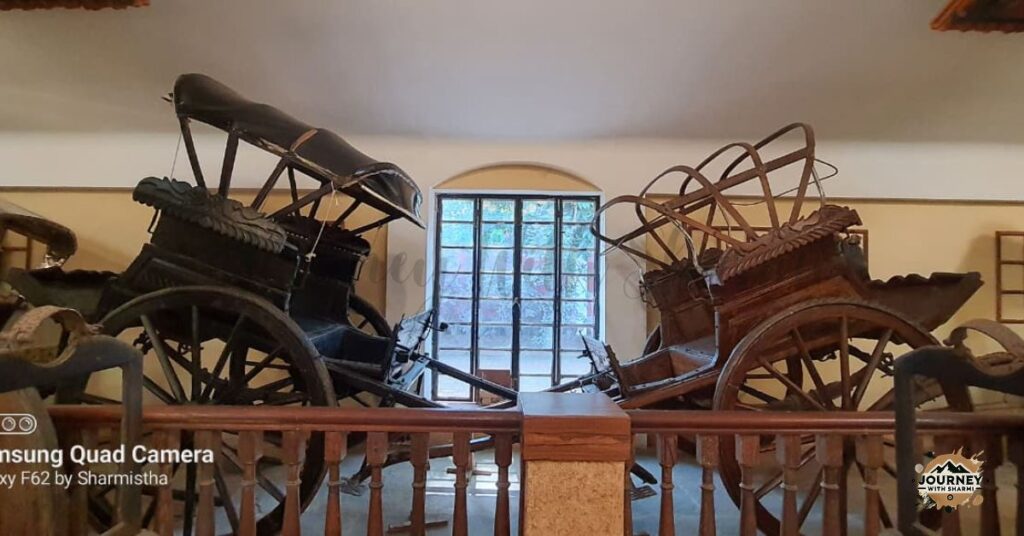
- Intricate Wheel Dynamics: The exhibit meticulously illustrates how wheel craftsmanship evolved—from solid wooden discs to spoked wheels reinforced with hand-forged iron rims.
- Children’s Vintage Vehicles: Tucked alongside the heavy carts are handmade wooden tricycles, push-carts, and wooden perambulators, reminding us how play was integrated into everyday functional craftsmanship.
Goa Cruti, Colonial Influence & Traditional Guild Crafts
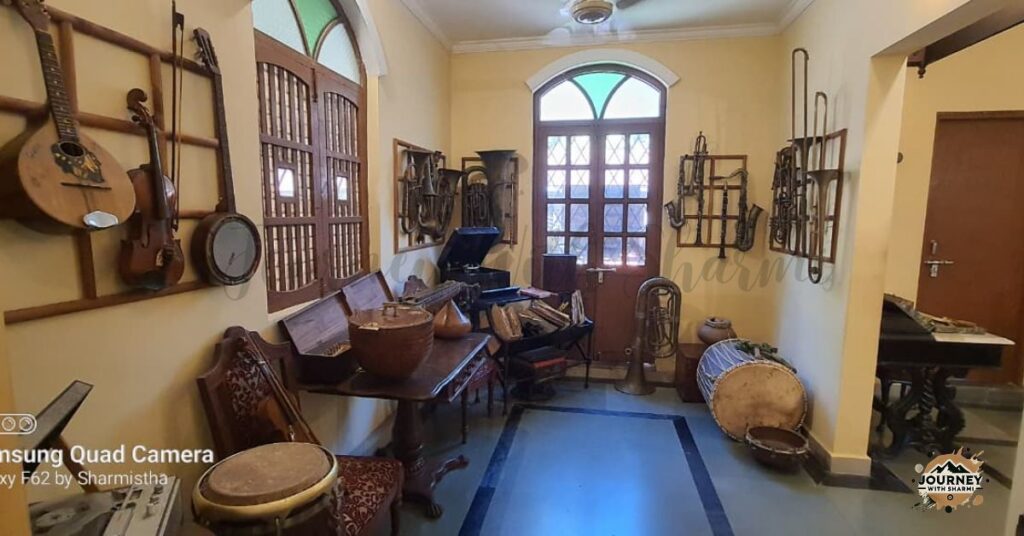
Moving into the third wing, Goa Cruti (Cruti meaning “creation”), I was struck by the seamless fusion of cultures following the Portuguese arrival in 1510. I found myself surrounded by colonial-era artefacts, religious relics, and specialised trade tools that show how local Goan craftsmanship blended with European influences:
Highlights that caught my attention included the following:
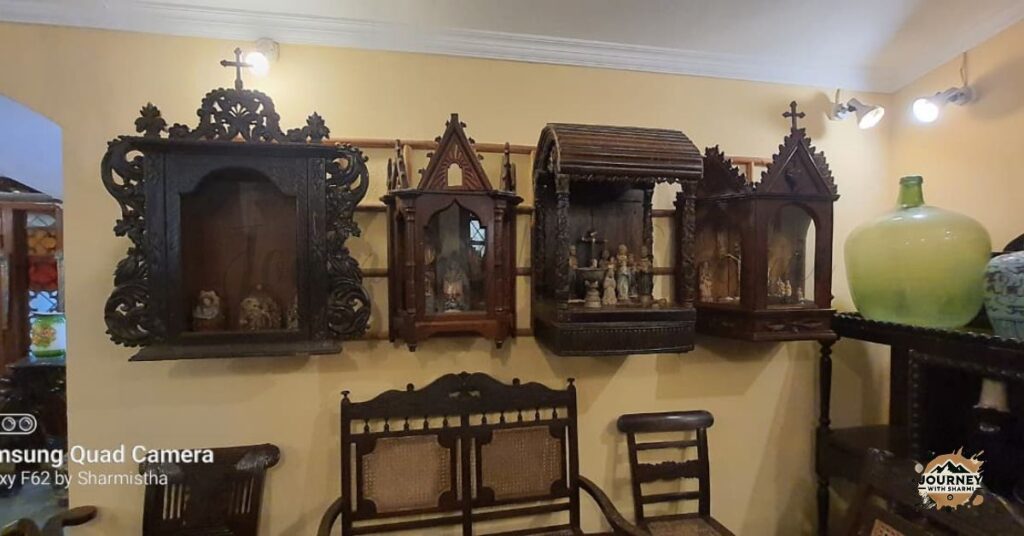
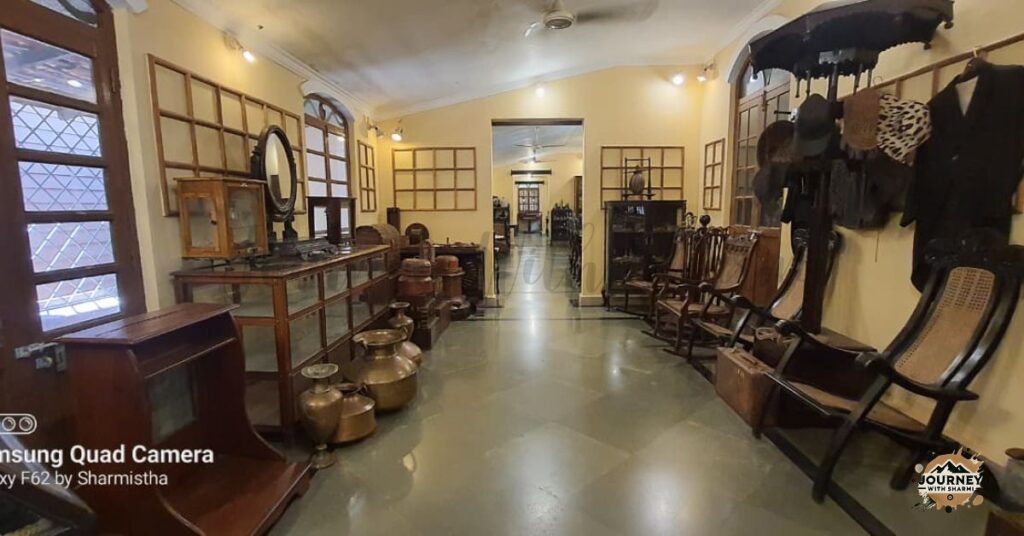
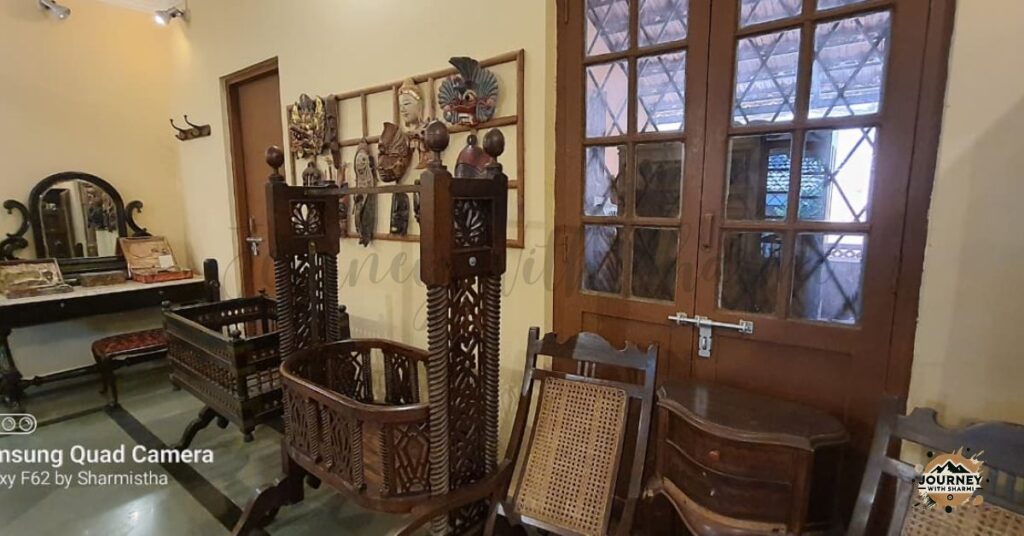
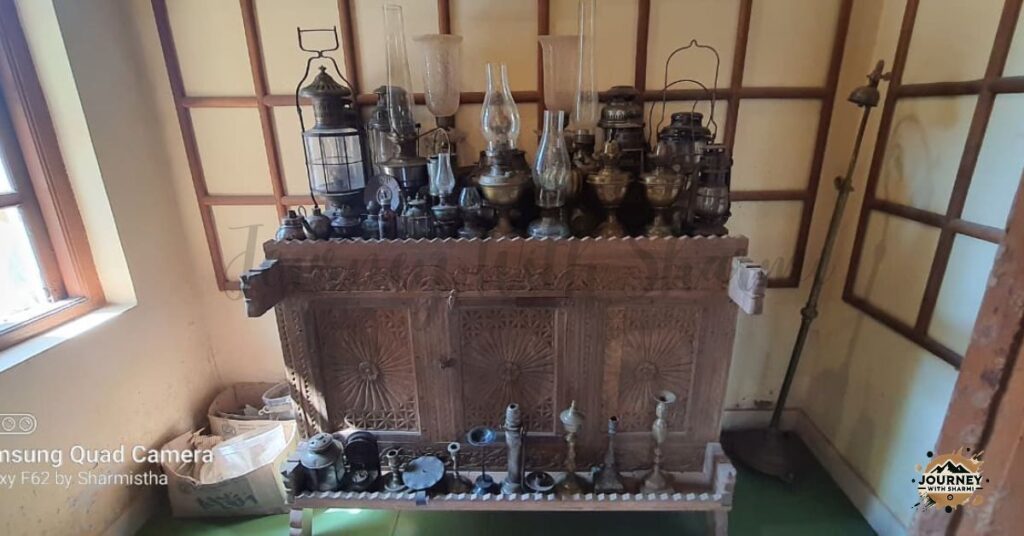
- Socio-Cultural Household Artefacts: Intricately carved rosewood furniture, ceramic grain storage urns, brass oil lamps (samai), cast-iron flat irons heated with glowing charcoal, and early manual coffee grinders.
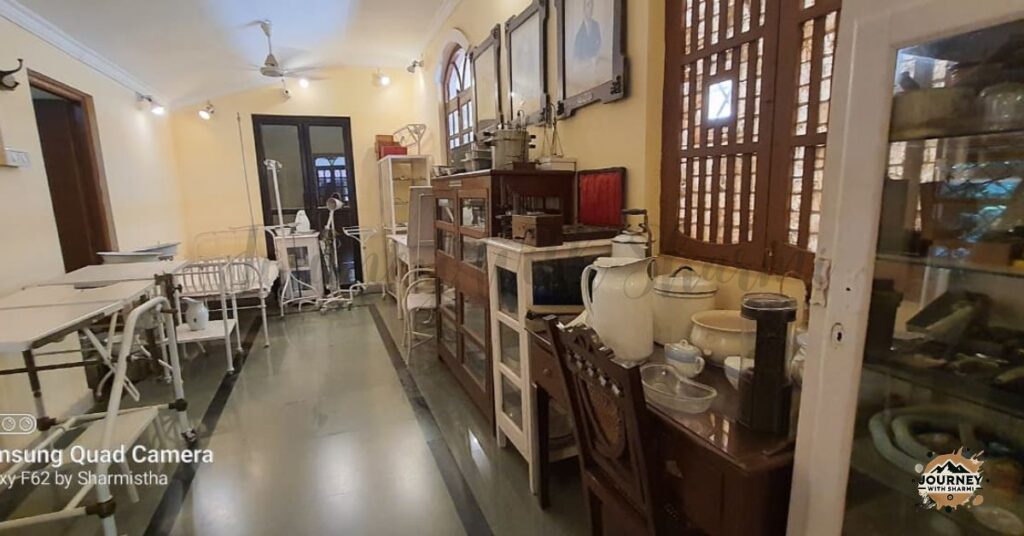
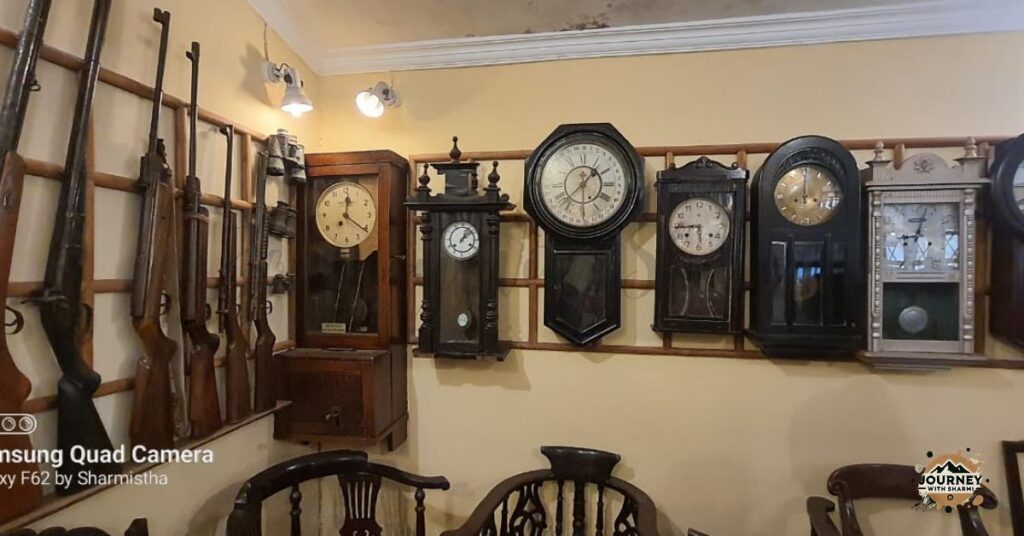
- Artisan & Medical Instruments: Early judicial records, traditional apothecary scales, vintage musical instruments (gotiom, violins, and mudans), and rare antique medical and dental tools used by village doctors.
- The Distillation Equipment: Historic copper stills and clay alembics used to double-distil cashew apples into Urrack and Feni, highlighting the technical precision of home-based distilling.
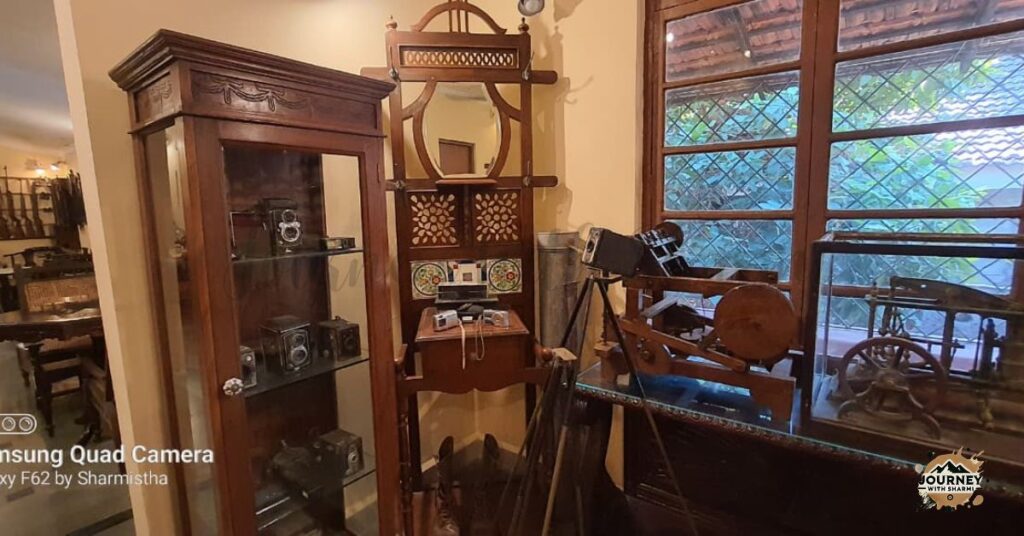
- Textile & Weaving Looms: Historic handlooms used by local Goan weavers to produce traditional garments and household textiles.
- Guild Trade Implements: Specialised toolsets of blacksmiths, master carpenters, potters, coppersmiths, and brass casters.
- Colonial Domestic Objects: Rare period furniture, imported trade ceramics, carved wooden altars, and everyday items illustrating household life in Portuguese Goa.
Architecture & Zero-Waste Sustainability
Walking onto the grounds, the first thing I noticed was that the museum’s architecture is itself a masterclass in upcycling and environmental stewardship:
- Architectural Upcycling: Every gallery structure was constructed using salvaged elements—including carved wooden doors, window frames, support pillars, and traditional terracotta roof tiles rescued from over 300 demolished Goan ancestral homes.
- Organic Farm Setting: The estate functions as an active organic farm, cultivating traditional indigenous vegetables, herbs, medicinal plants, spices, sugarcane, and rice varieties.
- Zero-Waste Energy Loop: Human waste from the property’s living quarters is routed through an anaerobic digester system to generate biogas. Combined with on-site solar power, the complex meets its own energy needs cleanly.
- Eco-Friendly Maintenance: The museum avoids synthetic chemical pesticides and fertilisers. All pest repellents and crop nutrients are created on-site using traditional, organic agrarian methods.
- Petting Zoo & Educational Farm: The grounds incorporate a domestic animal sanctuary to teach visiting children about traditional animal husbandry, crop rotation, and natural ecological balance.
Practical Travel Tips For A Smooth Visit To Goa Chitra Museum
If you’re planning your vacation, it is easy to default to the standard beach circuit. However, if you are looking for true value and depth, Goa Chitra easily ranks among the absolute must visit places in Goa. So, adding this museum to your South Goa exploration will balance out the sun and sand, providing crucial context to the land you are walking on.
Here, I’ve listed some practical travel tips that you must note before your visit.
- Book a Guided Tour: Make sure to request a guided walkthrough at the entrance. The stories explaining how specific wooden joints were constructed or how natural oils protected tools during monsoon seasons add incredible depth to the visit.
- Dress for Outdoor Pavilions: The museum complex features covered open-air pavilions separated by gravel pathways across an organic farm. Wear breathable cotton clothing and comfortable walking shoes.
- Photography Rules: Always check with the reception staff regarding active photo policies, as certain restored wooden artefacts are protected from direct flash exposure.
- Support Heritage Conservation: Visit the museum shop to buy locally crafted souvenirs and organic produce grown on the farm, directly supporting their ongoing conservation efforts.
- Combine with South Goa Exploration: Pair your museum visit with a relaxing afternoon at Benaulim Beach or Varca Beach, located just a few minutes away.
- Savour Local Cuisine: After your walk, head to a traditional Goan eatery in Benaulim or Margao for an authentic Goan fish thali paired with sol kadi.
Summary From My Own Experience: What I Took Away
As my visit drew to a close, I sat quietly near the central courtyard under the shade of an old tree. Watching the sun filter through the leaves onto reclaimed wooden beams, I realised why this trip felt so profoundly different from my previous visits to Goa.
We live in a fast-paced world dominated by plastic, mass production, and instant gratification. Goa Chitra reminded me of the grace of slow living—a time when every tool was made by human hands using natural materials, built to endure for generations. It taught me that progress should never come at the absolute expense of our heritage.
If you want to truly know Goa—beyond the postcards and cocktail menus—you must pay your respects to the hands that tilled its soil, built its homes, and crafted its story. Goa Chitra is not just a museum to visit in Goa; it is an unforgettable cultural experience that stays with you long after the sand leaves your shoes.
☛ Also Read:
- Dudhsagar Waterfalls Trek To The Top: Our Unforgettable Western Ghats Adventure
- A Day In Sula Vineyards, Ultimate Gateway Beyond Nashik’s Ancient Sacred Soul
- Elephanta Caves, Mumbai: An Ancient Rock-Cut Temple, Secrets of Lord Shiva
- Top 10 Best Budget Backpacking Destinations in India for Every Travel Style
- 9 Eco-Tourism Places in South India to Explore Where Nature Whispers Back
Frequently Asked Questions About Goa Chitra Museum
Is the Goa Chitra Museum suitable for children and families?
Yes, it is very family-friendly. Children particularly enjoy the open-air organic farm setting, the collection of vintage transport vehicles in the Goa Chakra gallery, and the small domestic animal sanctuary on the grounds.
What makes Goa Chitra different from other museums in Goa?
Unlike traditional government-run state museums, Goa Chitra is a privately curated ethnographic complex built entirely with reclaimed eco-friendly materials. It focuses specifically on the rural, agrarian, and pre-industrial technological heritage of ordinary Goans, rather than just royal or colonial artefacts.
Is the museum fully wheelchair accessible?
The complex features ground-level, covered open-air pavilions, but the pathways connecting the galleries consist of gravel and unpaved farm terrain. Visitors with mobility aids or wheelchairs may require assistance navigating the outdoor ground surfaces.
Can I visit the museum on a rainy day during the Goa monsoons?
Yes. The three gallery collections are housed under covered structures and reclaimed wooden roofs. However, because you need to walk along open-air farm paths between the main halls, carrying an umbrella or rain poncho is recommended during heavy downpours.
How much time should I set aside for a complete visit?
Plan to spend between 2 to 3 hours. This gives you enough time to complete the guided walkthrough of all three galleries—Goa Chitra, Goa Chakra, and Goa Cruti—and stroll around the organic farm grounds without rushing.
Are personal guided tours included in the ticket price?
Yes. The museum does not rely on static digital displays or light-and-sound shows; your experience relies on personal, live guided walks conducted by knowledgeable staff who share the stories and working mechanics behind the artefacts.
Is flash photography allowed inside the galleries?
While basic photography rules are stated at the reception desk, direct flash photography is generally restricted to protect delicate paper manuscripts, historic textiles, and restored antique wood finishes from light damage.
What is the best way to travel to the museum from North Goa?
The museum is located in Benaulim, South Goa (approximately 35–40 km from popular North Goa hubs like Candolim or Baga). The most convenient options are hiring a private taxi for a half-day trip or renting a self-drive vehicle, taking the NH66 south toward Margao and Benaulim.
Can I buy local produce or souvenirs on-site?
Yes. The museum features a small shop where you can purchase locally crafted Goan souvenirs as well as organic farm produce grown right on the property. Purchases directly support the museum’s self-funded conservation efforts.