
Mysore Palace, My Journey Through Karnataka’s Royal Heritage
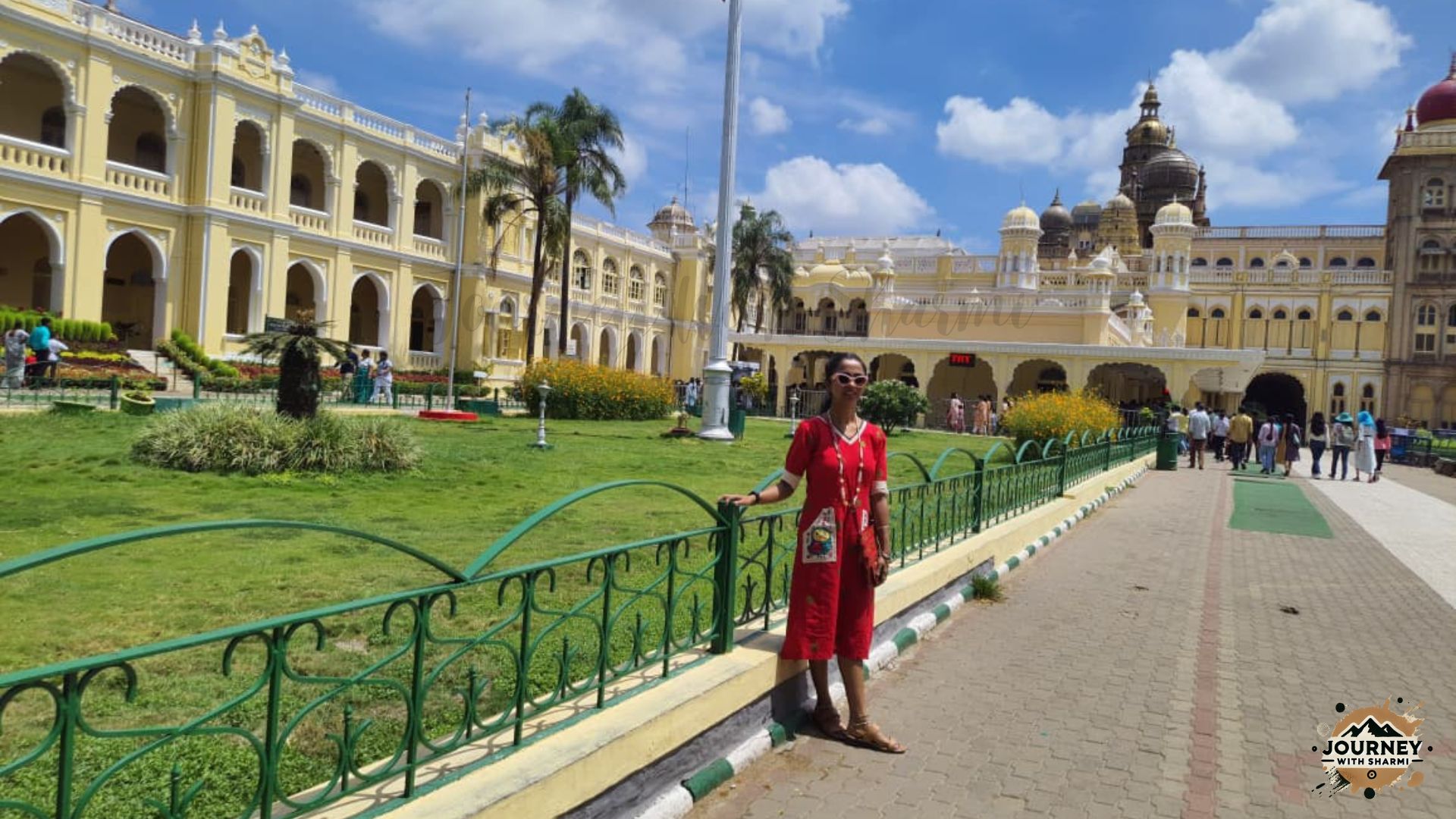
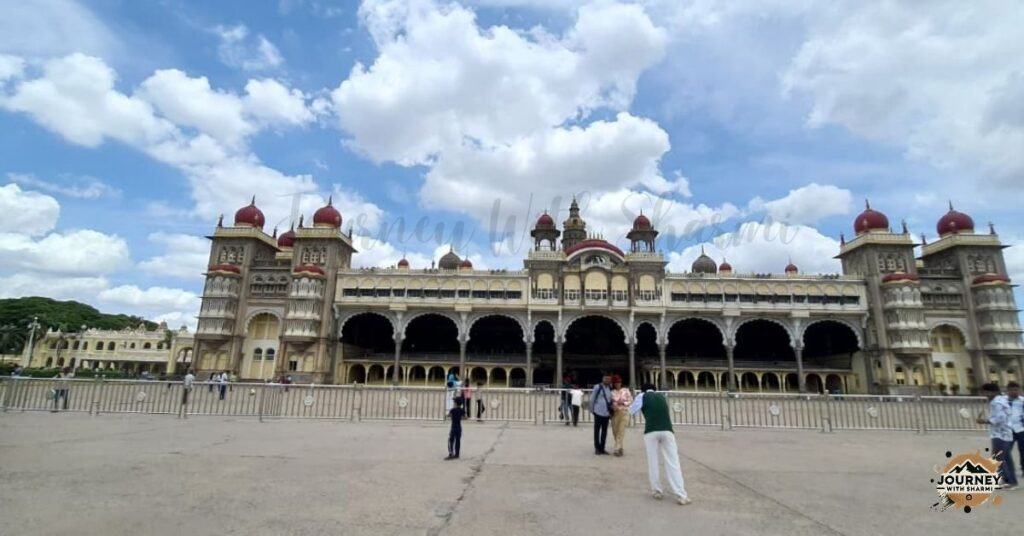
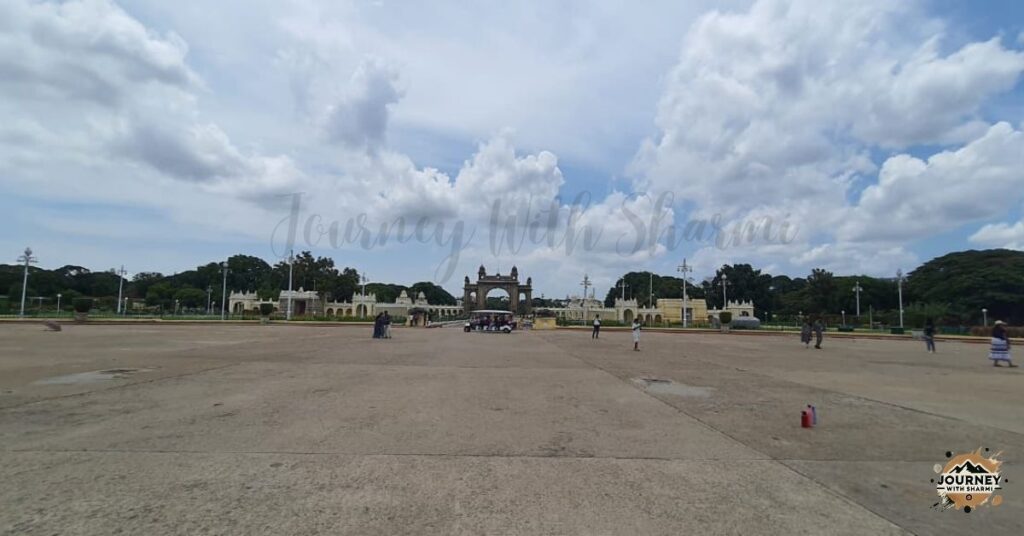
As I stepped through the South Gate of Mysore Palace, it felt as if history itself had come alive in front of me. The atmosphere automatically seemed to echo with centuries of stories, whispering through the grand arches. I was mesmerised; honestly, it can’t be put into words the rush of emotions I felt seeing the palace for the very first time.
Believe me, no photograph can truly give you even a glimpse of what this place feels like—only when you stand here in person do you realise the sheer magnificence of the palace.
My camera was hanging lazily around my neck, but I wasn’t in a hurry to click. The first few minutes for me were to soak in its royal grandeur, the lush manicured lawns, the intricate domes gleaming in the sunlight, and that sense of being somewhere truly special.
They call it the Amba Vilas Palace, but to the world, it’s simply Mysore Palace—a living icon of Karnataka’s royal heritage.

Mysore Palace Essential Visitor Guide
| Detail | Information |
| Location | Sayyaji Rao Road, Agrahara, Chamrajpura, Mysuru, Karnataka 570001 |
| Timings | 10:00 AM to 5:30 PM (Open Every Day) |
| Main Palace Entry Fee | INR 120 for Indians, INR 70 for Children (10-18 years), INR 50 for Students (Study Tour), INR 1000 for Foreigners (with Audio Kit) |
| Illumination Timings | Sundays & Public Holidays: 7:00 PM – 7:45 PM | Dussehra: 7:00 PM – 10:00 PM |
| Light & Sound Show Cost | Adults: INR 100 (Kannada) & INR 120 (English), Children (10-18 years): INR 40 (Kannada) & INR 50 (English) |
| Amenities Available | Free Wheelchairs, Braille Guides, Baby Care Centres, Wi-Fi, Bicycle Rentals |
This is the crown jewel among the seven palaces here. You can’t miss it—it’s as much a part of Mysuru’s skyline as the Chamundi Hills in the background.
A Little Backstory Of Mysore Palace Before We Step In
Before we wander inside, let me take you on a quick rewind.
The Wodeyar dynasty, tracing its roots to the Yadava clan of Shri Krishna, once ruled this land. The first palace on this site was built way back in the 14th century, but it wasn’t the beauty we see today. That one was made of wood—and sadly, it was destroyed in a fire during a royal wedding
Enter Queen Regent Kempananjammanni Devi, a woman of vision and resilience. She hired the celebrated British architect Henry Irwin, and in 1912, after years of meticulous work, the Mysore Palace as we know it stood ready, at a cost of around INR 42 lakhs, a princely sum for the time. The present structure of this palace is the fourth to occupy this site.
What makes Mysore Palace stand out is its Indo-Saracenic architecture—a mix of Mughal, Rajput, and European styles. The domes hint at Mughal influence, the arches whisper of Rajasthan, and the stained glass and flooring carry a European flair.
Stepping Inside – My First Impressions
As I walked in, the air shifted. The noises of the city faded, replaced by the echo of visitors’ footsteps on the grand marble floors. The smell of polished wood mixed with that faint mustiness you only find in places that have stood for over a hundred years.
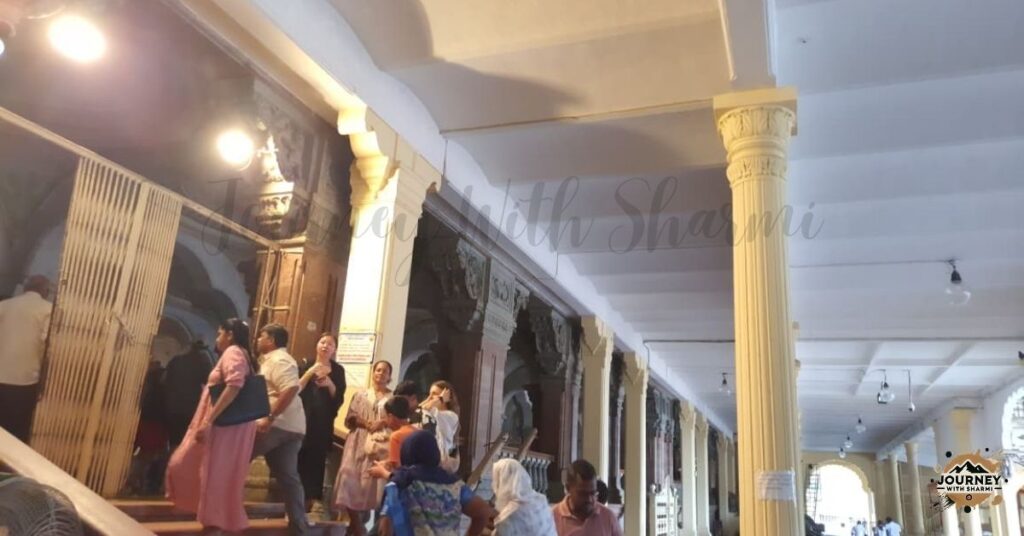
From the entrance, the palace felt like a maze of beauty. Every corner, every arch, every pillar had a story to tell. And I wanted to hear them all.
Mysore Palace features 3 main entrance gates (East, South, and West):
- The East Gate (Ane Bagilu / Elephant’s Gate): Used solely for VVIP entrances.
- The South Gate: The primary entrance for general tourists.
- The West Gate: Typically opened during the spectacular Dussehra festival.
Additionally, there is a striking 5-storied watchtower rising above the structure, with a foundation length of about 245 feet and a breadth of about 156 feet.
Did You Know? The restricted cellar of Mysore Palace hides real secret underground tunnels. While legends of a 15 km escape route to Srirangapatna are a myth, archaeologists actually discovered a genuine subterranean tunnel just 500 meters from the palace grounds (near Gun House circle), proving the royals built hidden networks to secretly move troops and weapons!
During the “Dussehra” celebration, as well as on Sundays and other Public Holidays, the Palace is illuminated with 97,000 electric bulbs – making it into a golden jewel against the night sky.
Key Highlights of Mysore Palace
1. The Dolls’ Pavilion (Gombe Thotti)
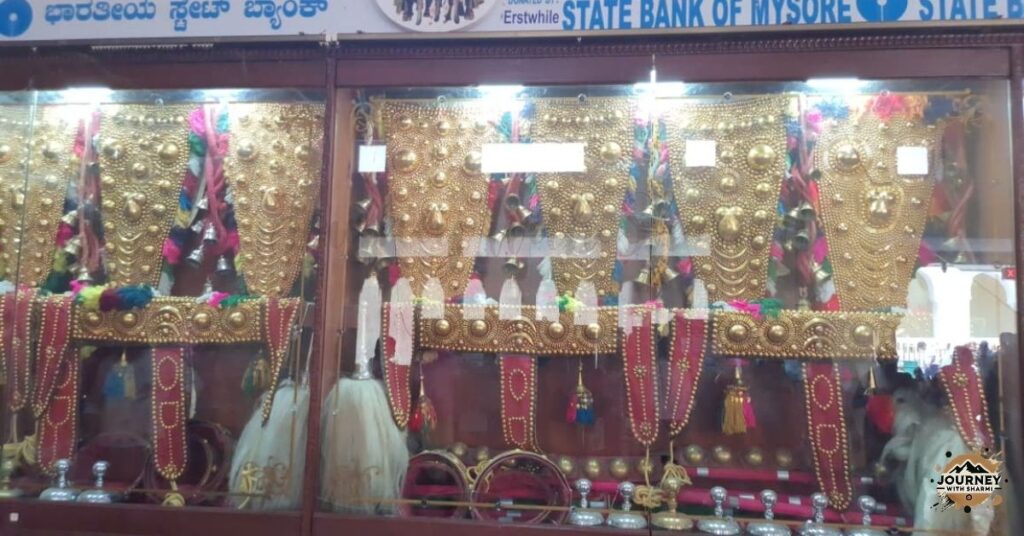
My first stop was the Gombe Thotti—a gallery filled with dolls and ceremonial objects. These aren’t just toys; they’re part of Mysuru’s Dussehra tradition, when such dolls are displayed to celebrate the festival.
The highlight here was the Golden Howdah, or Ambari, a massive gold-plated seat used to carry the idol of Goddess Chamundi during Dussehra processions. Seeing it up close, I could imagine the elephants decked up in grandeur, the rhythmic beat of drums, and the streets bursting with colour.
2. Paintings Of The Dussehra Parade
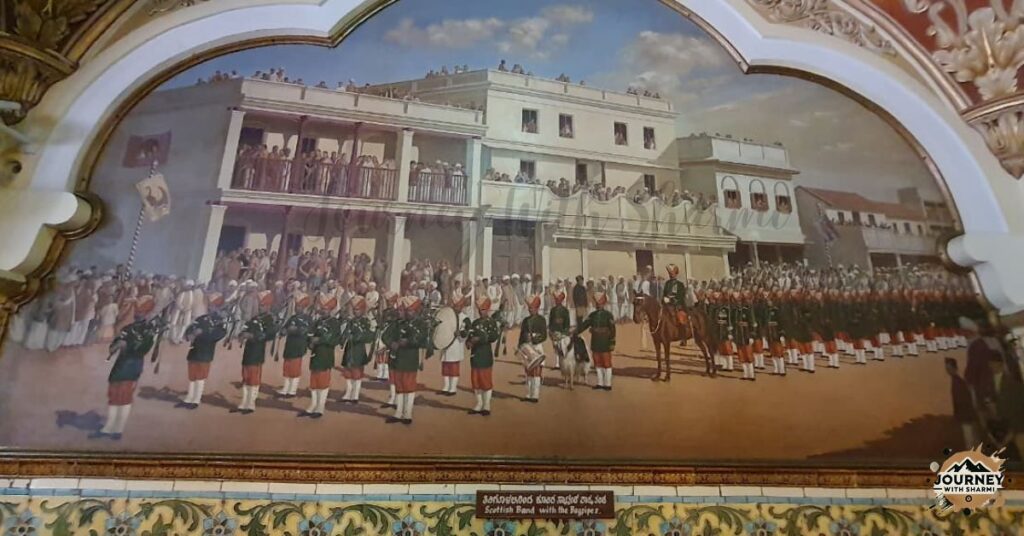
The next room pulled me straight into the past—26 panels of paintings that capture the royal Dussehra parade between 1934 and 1945. Each stroke seemed alive, almost as if the festive crowd might start cheering again if you stared long enough.
3. Kalyana Mantapa—Where Celebrations Live
Ah, the Kalyana Mantapa! If there was a single spot that made my jaw drop, it was this one. This octagonal hall was where royal weddings and birthdays took place, and I could see why.
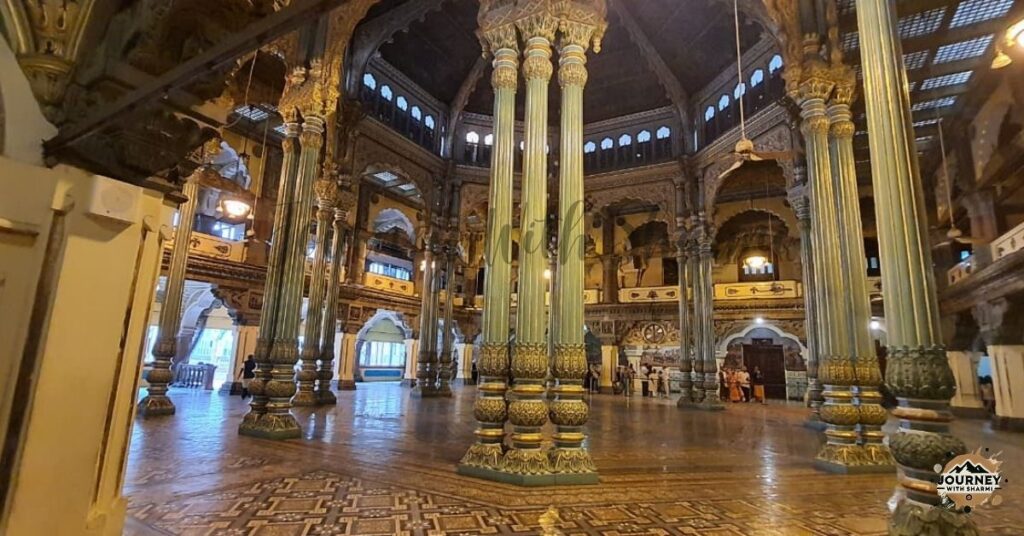
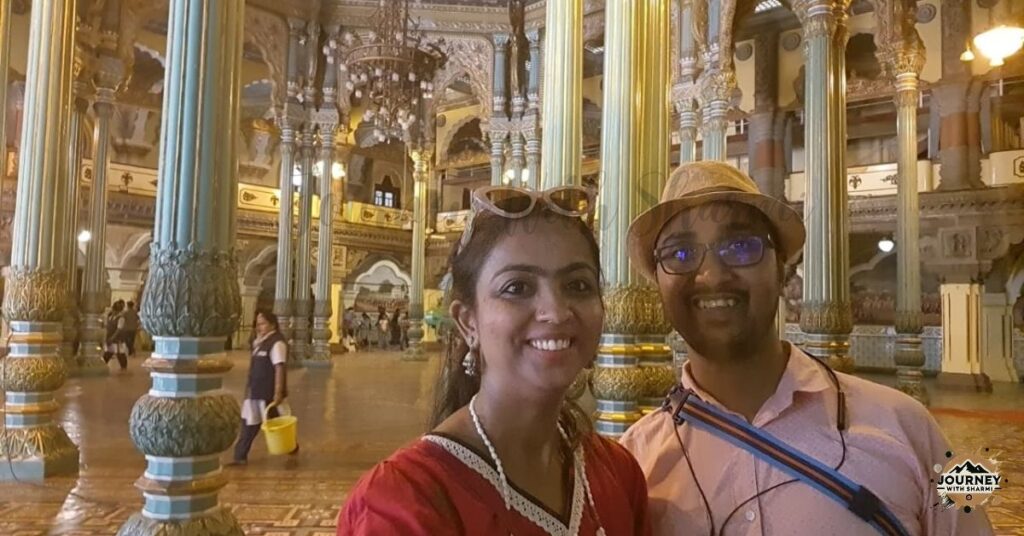
The stained-glass ceiling, the peacock motifs, the English-made mosaic tiles, the golden-green columns—it was like stepping inside a jewel box. I craned my neck to admire the massive chandelier dangling from the dome, and for a second, I forgot to breathe.
4. Portrait Gallery
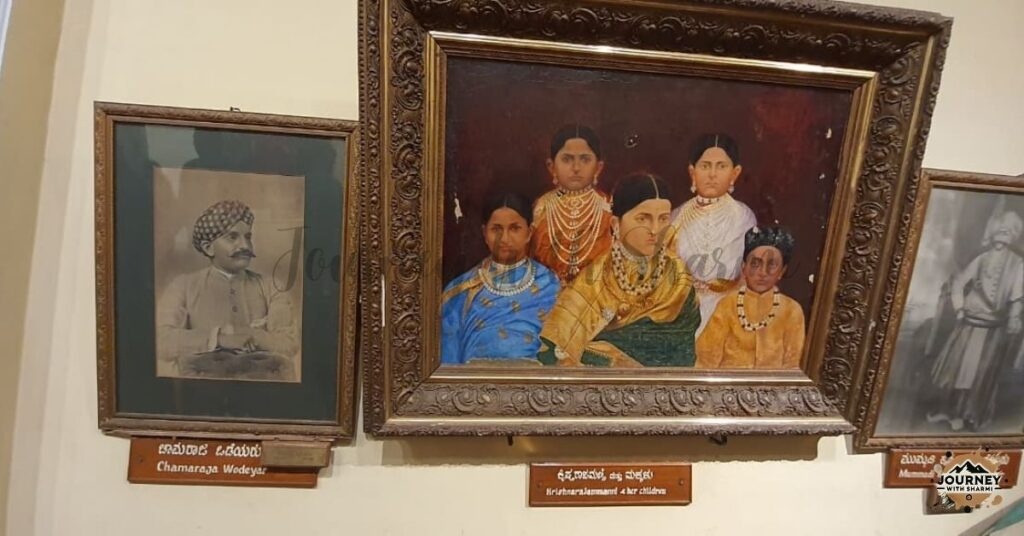
Here, the walls spoke—literally. Lined with paintings and photographs of the Wodeyar royals, this gallery felt intimate, almost personal. The works of Raja Ravi Varma stood out, each brushstroke carrying a richness that no photograph could capture. My favourite was the painting of Jayachamaraja Wodeyar’s wedding—you could almost hear the music in the air.
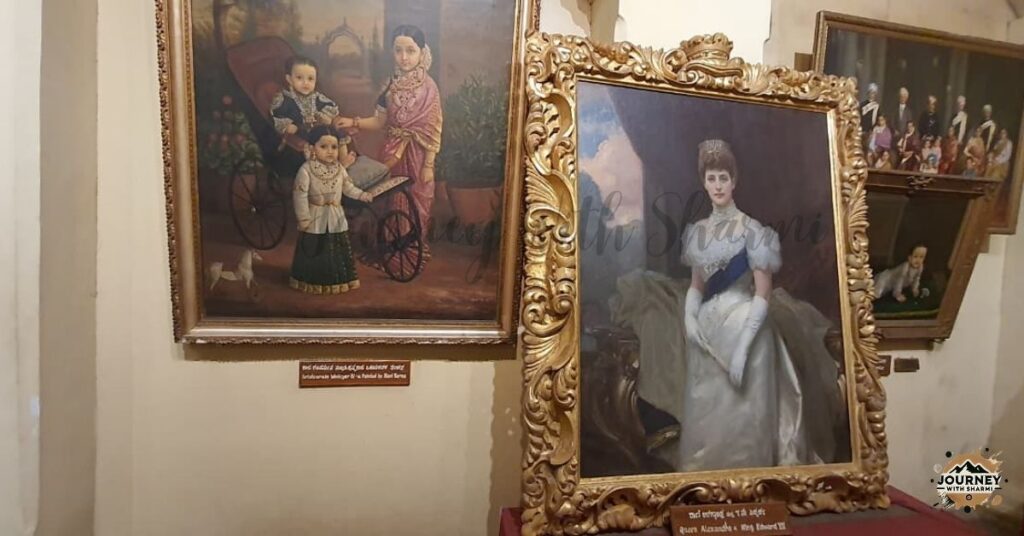
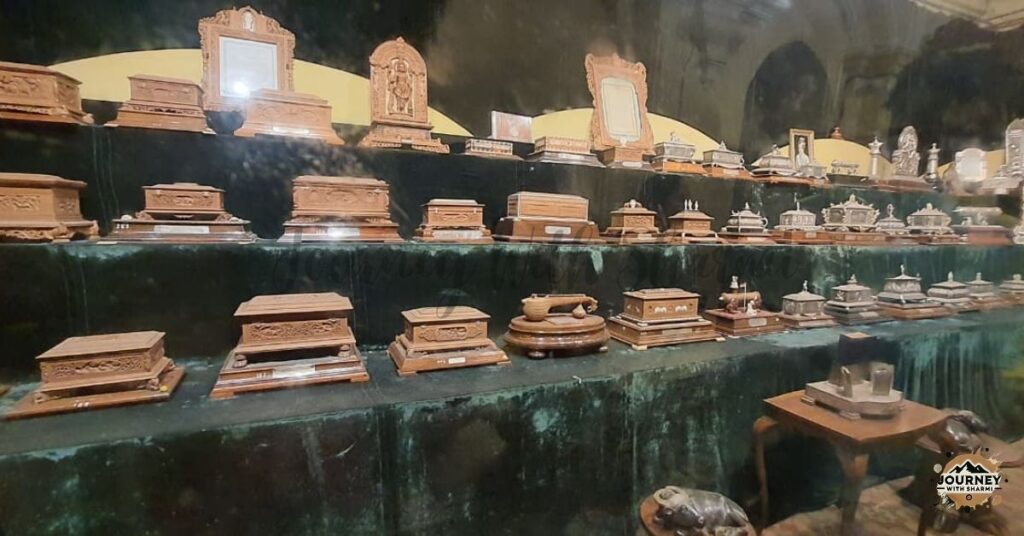
5. Casket Room
This was an unexpected delight—rows of intricately designed caskets made from sandalwood, silver, and ivory. Each one was a token of loyalty and respect, gifted to the kings by their people.
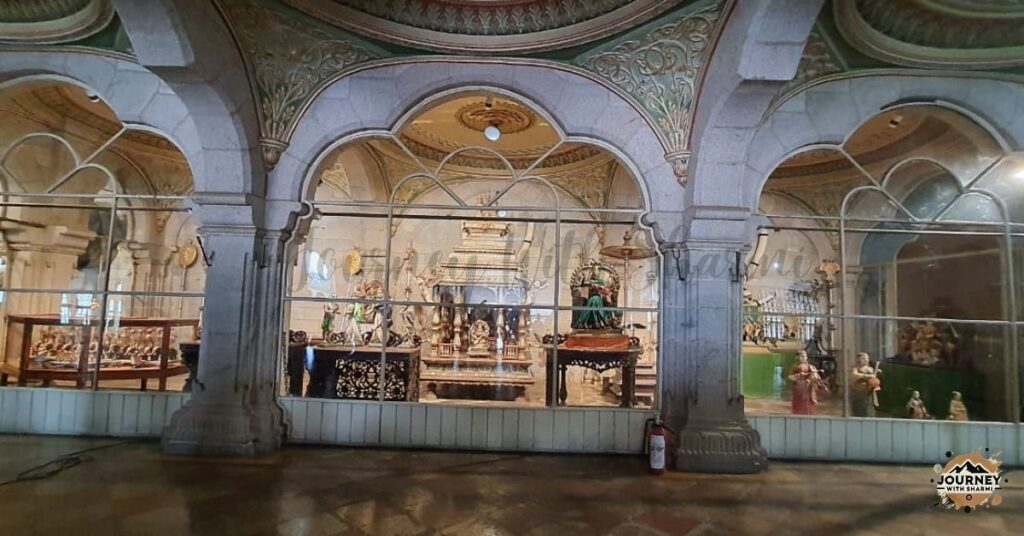
6. Wrestling Courtyard
If you think royal life was all silks and banquets, think again. The wrestling courtyard told another side of the story. The Wodeyars were patrons of wrestling, especially a traditional form called Vajramushti. I stood there imagining the arena alive with cheering crowds, the wrestlers locked in fierce combat.
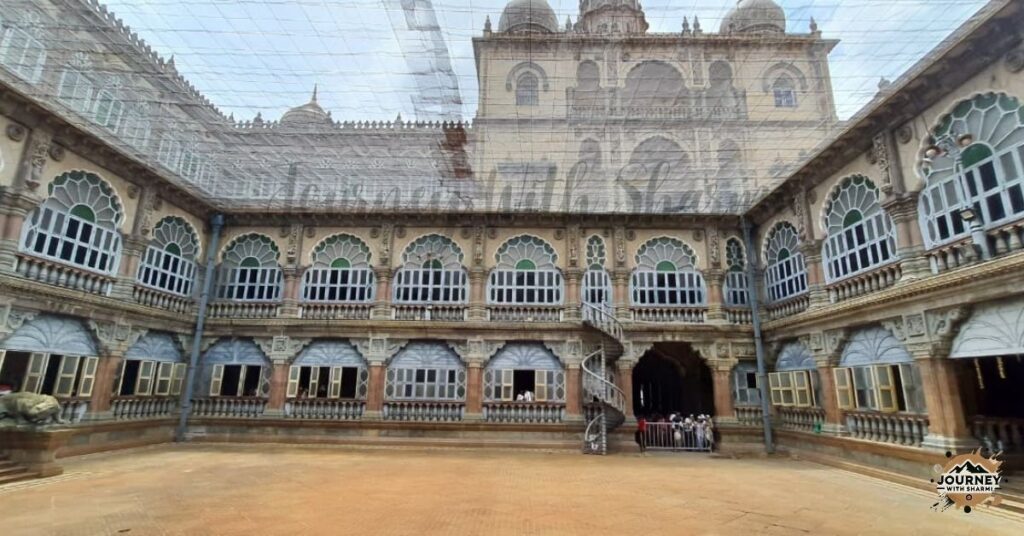
7. Durbar Hall – The Public Throne Room
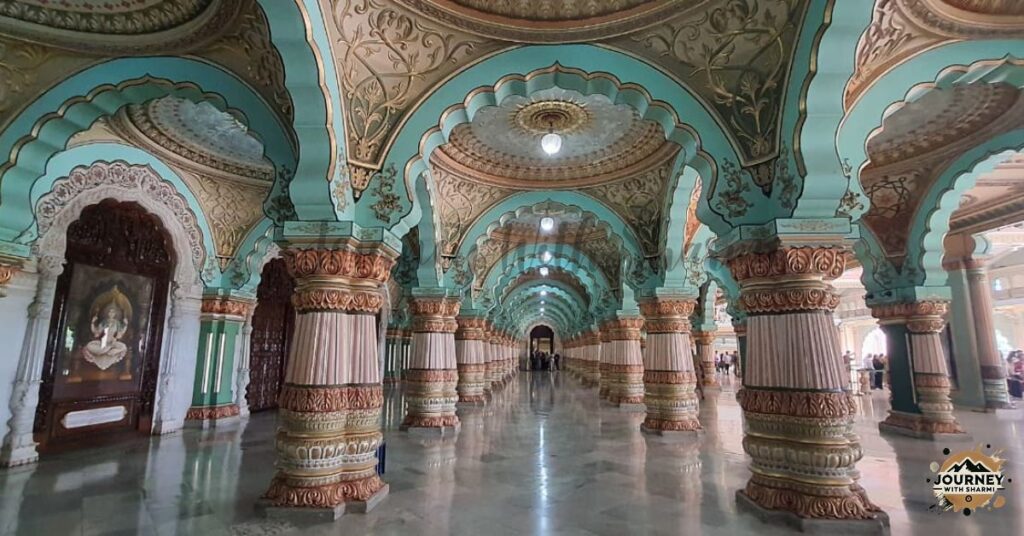
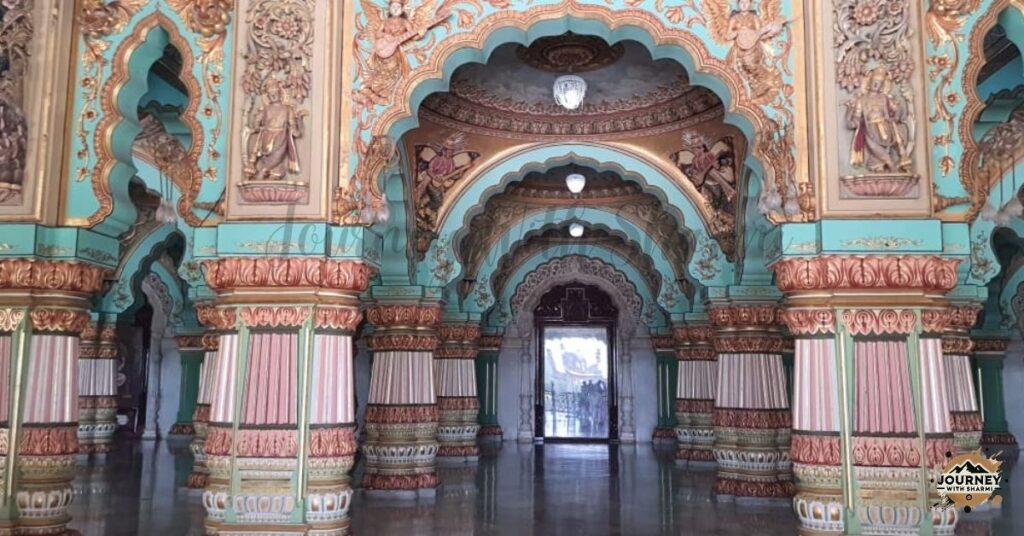
Green and gold arches, floral filigree, a ceiling painted with Brahma, Vishnu, Shiva, and the zodiac signs—this was Durbar Hall. Added in 1938, it was where the king met his ministers and subjects.
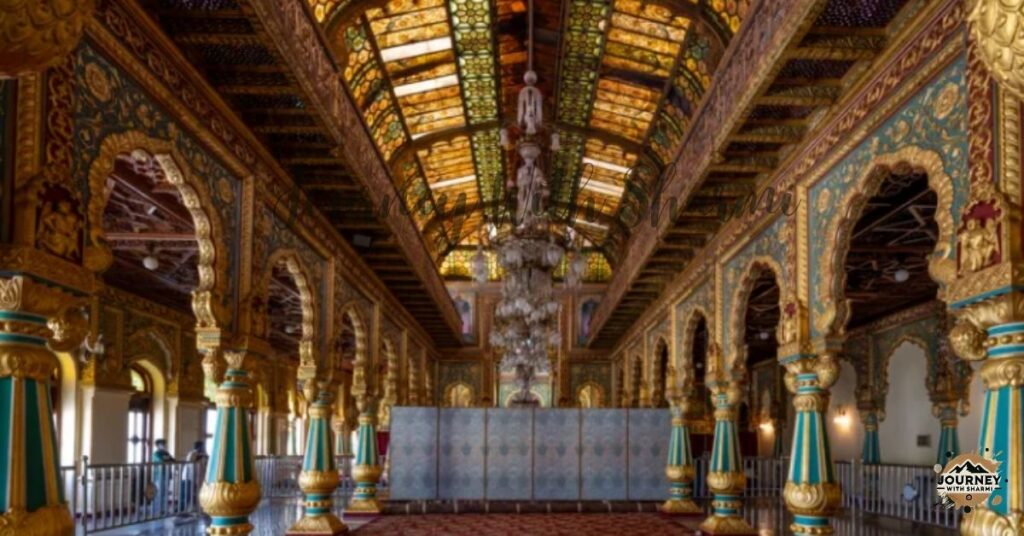
In one corner, I found myself mesmerised by Raja Ravi Varma’s painting of Sita’s Swayamvar—the colours still vivid after all these decades.
8. Amba Vilas Durbar Hall – The Private Royal Chamber
If Durbar Hall was impressive, the Amba Vilas Durbar Hall was breathtaking. Blue and gold dominated the space, with pillars wrapped in gold, arches glittering with intricate filigree, and marble floors inlaid with semi-precious stones.
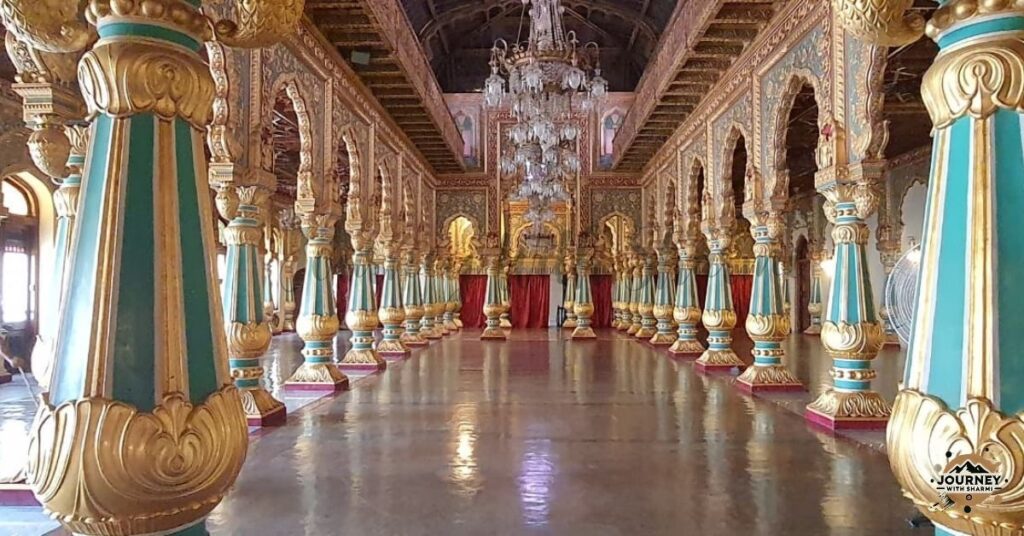
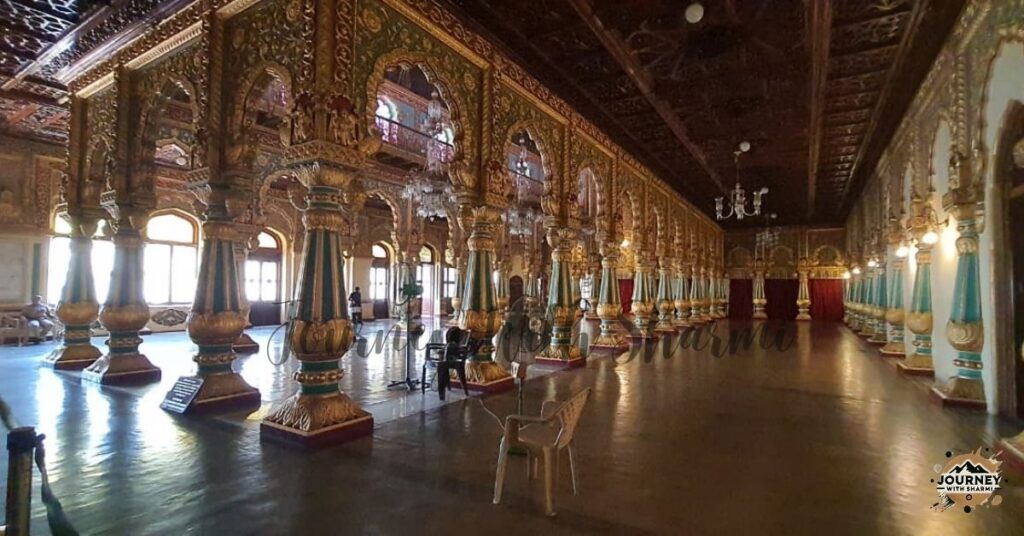
The chandeliers here seemed almost too perfect, their crystals catching the sunlight and scattering it like diamonds. I couldn’t help but stand still, half-expecting a Wodeyar king to walk in and take his seat.
9. Hallway Of Doors
A corridor lined with doors—some made of rosewood, one shimmering in silver. These were salvaged from the old wooden palace, and though many didn’t lead anywhere now, they stood as quiet witnesses to centuries gone by.
10. Temples Inside The Mysore Palace
Tucked within the Mysore Palace grounds are 12 temples, each with its own character. I stepped into the Lakshmiramana Swami Temple, located in the western part of the palace fort, within the palace grounds. This is the oldest temple in Mysuru. A coronation ceremony for child Raja Krishnaraja Wadiyar III took place here in 1799.
The Sweta Varahaswami Temple, located just beside the South Gate of the palace, caught my eye with its beautiful carvings. It was built in the renowned Hoysala architectural style, dedicated to the Varaha (boar) avatar of Vishnu.
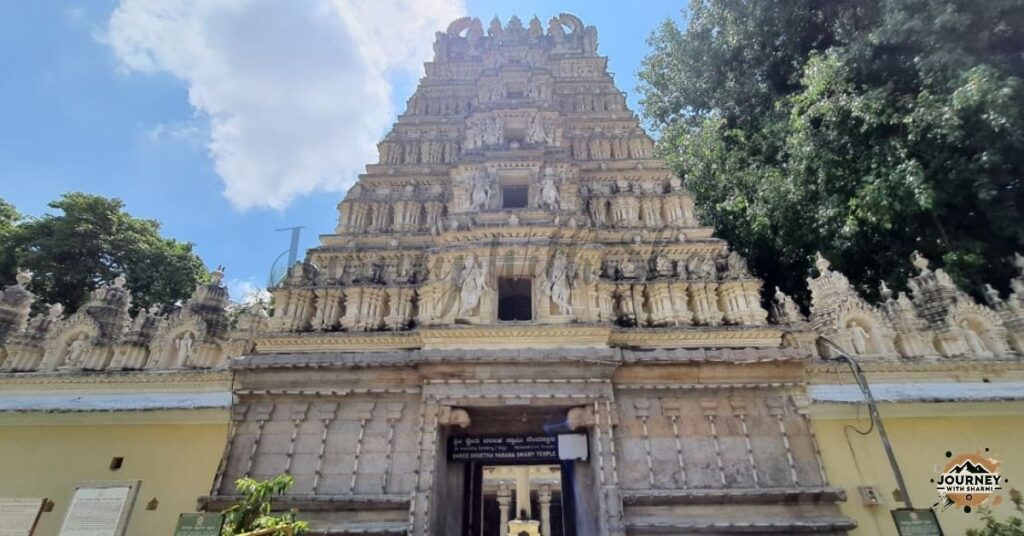
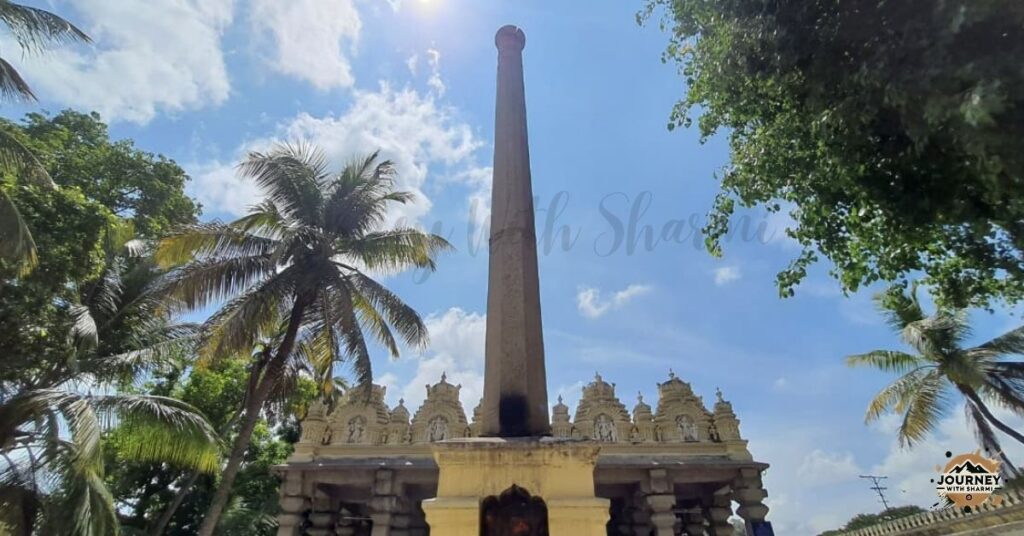
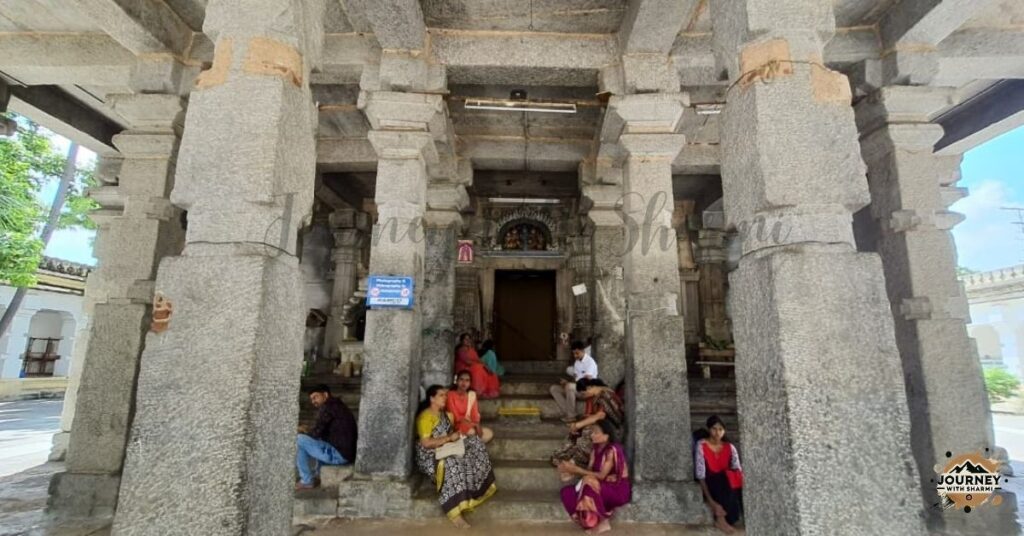
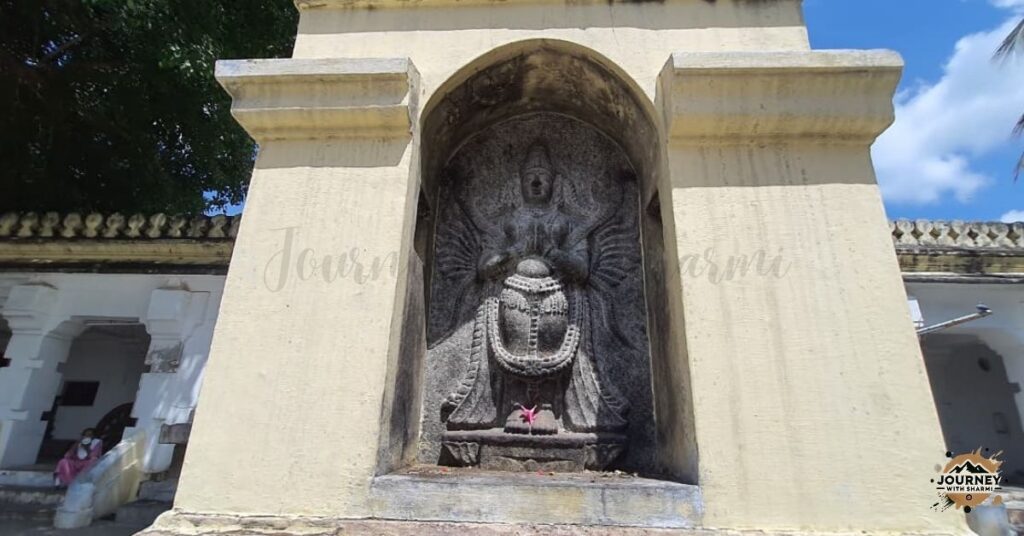
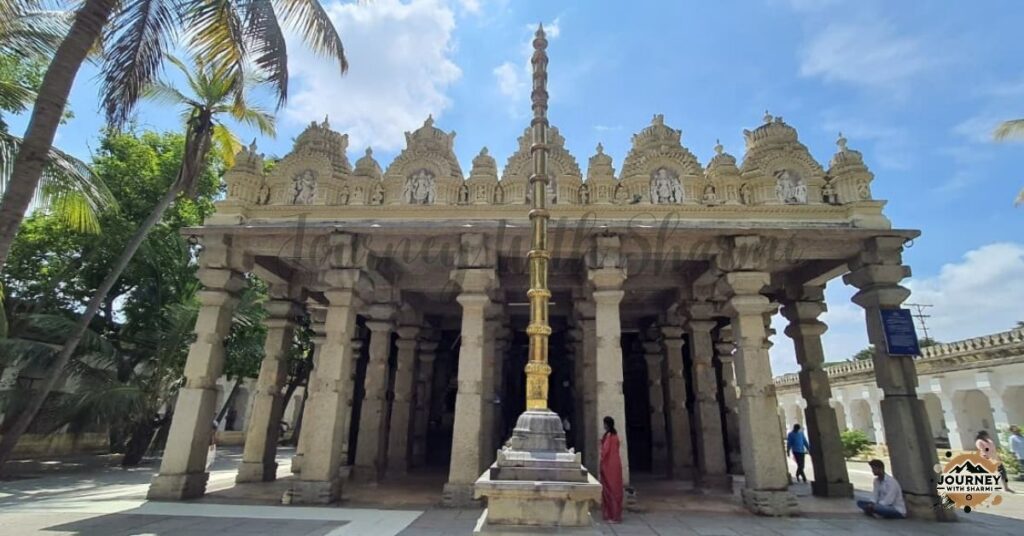
Prasanna Krishnaswami Temple: Within the palace complex stands the Sri Prasanna Krishnaswami Temple, built between 1825 and 1829 by Krishnaraja Wadiyar III to address the absence of a Krishna shrine inside the palace. While specific references are limited, the temple is likely most active during Janmashtami celebrations.
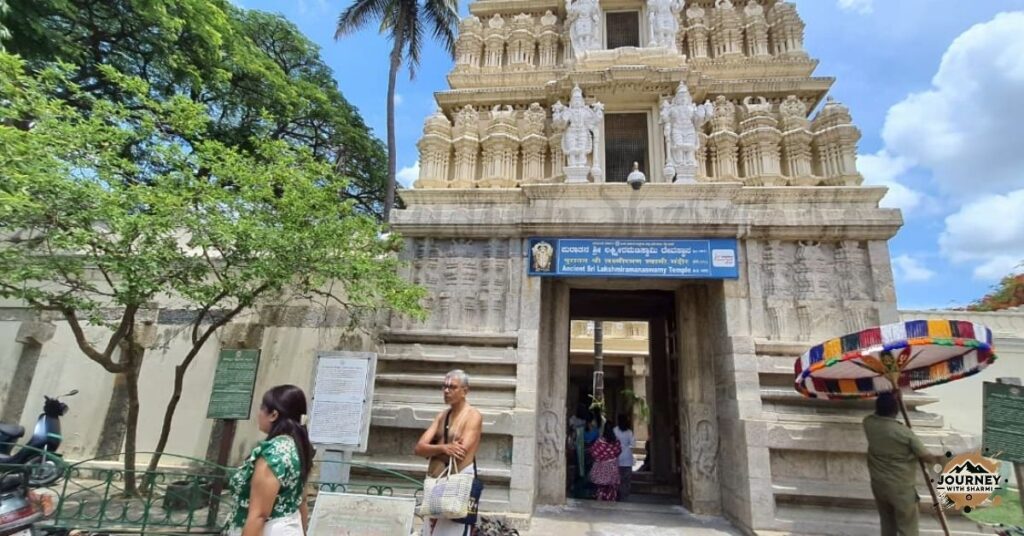
Other important temples located inside the Mysore Palace boundary are:
- Bhuvaneshwari Temple: Located on the northern side of the palace fort, opposite the Varahaswamy temple, this temple was built in 1951 by Jayachamarajendra Wadiyar and houses the copper Surya Mandala from the Palace. It is renowned for Rathasapthami celebrations, where the Surya Mandala receives special worship.
- Venkataramana Swami Temple: This temple was built after Queen Lakshmammanni dreamt of Lord Venkataramana asking her to bring his statue to Mysuru—an act said to have revived the Wodeyar dynasty. Though not officially documented, you’ll likely find festivals like Vaikuntha Ekadashi and Venkateshwara Jayanti celebrated here with devotion.
- Kodi Bhairavaswami Temple: This temple is located within the Mysore Palace walls, and is dedicated to Lord Shiva in his fierce Bhairava form, its name drawn from its very location. While not widely documented, devotees here are likely to observe festivals such as Bhairava Jayanti and Mahashivaratri with deep reverence.
- Trinayaneshwara Shiva Temple: Inside today’s expanded palace grounds, you’ll find the Sri Trinayaneshvara (Trinesvaraswamy) Temple, once located outside the old fort near Devaraya Sagar. Dedicated to Lord Shiva, the “Three-Eyed Lord,” it carries the legend of Sage Trinabindu’s penance and showcases intricate carvings of deities alongside statues of Wodeyar rulers. The temple truly comes alive during Mahashivaratri, when prayers are held every three hours throughout the night.
- Gayatri Temple: At the southeast corner of the fort, corresponding to the Trinayaneshvara Temple, you’ll find the Sri Gayatri Temple, built in 1953 by Jayachamarajendra Wadiyar. Housing three shrines dedicated to Savithri, Gayatri, and Saraswathi, this temple becomes especially vibrant during Navaratri and Saraswati Puja celebrations.
Residential Museum Of Mysore Palace
When you step out of the grand Mysore Palace tour, don’t rush off just yet—because tucked quietly behind the main palace is the Residential Museum, often called the Private Residential Museum. Unlike the grandeur of the main palace, here you’ll experience something more personal, almost like stepping into the royal family’s home.
This part of the palace was the only section that survived the devastating fire of 1897, and when the new palace was built in 1912, it was preserved as the old residential wing, known as Karikal Thotti.
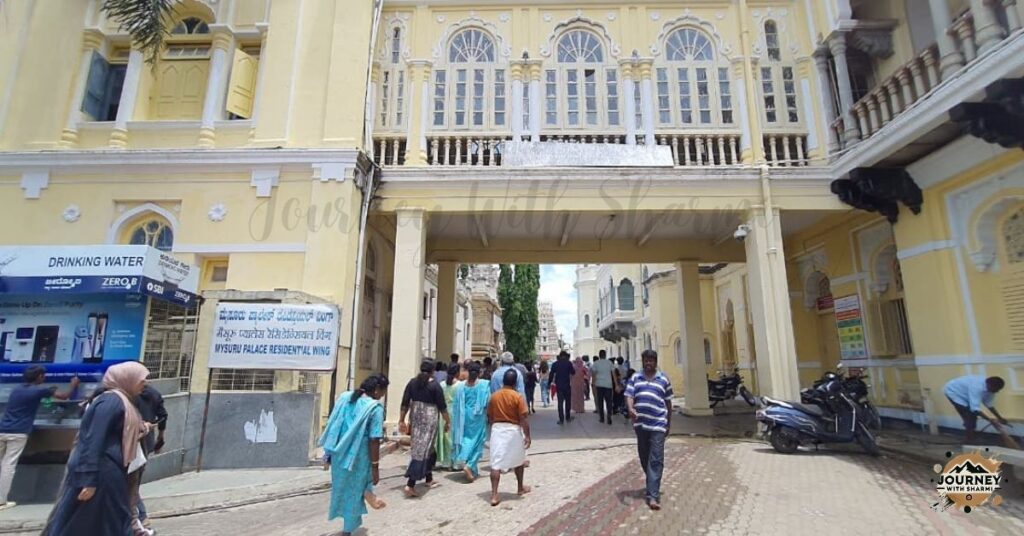
Today, it belongs to Srikanta Datta Narasimharaja Wodeyar, the Mysore royal family’s scion, who has transformed it into a museum showcasing their private collections.
As you walk towards it, guards will point the way. You’ll pass the serene Prasanna Krishnaswamy Temple on your left and even the showroom of The Royal House of Mysore, the fashion brand owned by Narasimharaja Wodeyar.
Soon, the two-storied structure with its terracotta-tiled sloping roof and balconies comes into view. Stepping inside, you’ll find yourself in an open quadrangle with a verandah lined with vintage photographs.
Take a moment to look closely—those photos tell stories of the Mysore maharajas, their royal ceremonies, and their close ties with European elites of the time. You’ll even spot group photos of the royals with their hunting trophies, a sport once embraced with grandeur.
And don’t miss the fascinating link between the Wodeyars and Rolls-Royce cars, a passion well-documented in the displays. As you wander further, you’ll notice traditional paintings and sketches on yoga and mysticism—complex, thought-provoking themes that give you a sense of the spiritual side of the royals.
Right at the entrance, your eyes might first catch the charming display of royal toys—tiny palanquins, goat-pulled carts, and other playthings that once amused young princes and princesses.
The deeper you go, the more intimate it feels. Imagine standing in the original living rooms, admiring gold-leaf painted doors, stained-glass windows, marble floors, and royal furnishings that whisper of another era. Chandeliers, costumes, palanquins, thrones, hunting arms, and even the silver wedding throne of Krishnaraja Wodeyar IV bring royal life alive in front of your eyes.
Summary From My Own Experience: It Is One Of The Best Places To Visit In Mysore
The Mysore Palace isn’t one of those places that you just visit, take a few pictures, and move on.
It’s not just the architectural beauty or the historical richness—it’s the feeling you get when you walk through its halls. You can almost hear the echo of royal footsteps, the strains of a veena from a wedding, the roar of the crowd during Dussehra.
For me, it wasn’t just about seeing the palace; it was about feeling it. And that’s why, even now, sitting far from Mysuru, I can close my eyes and see it—bathed in golden light, standing proud, a living monument to Karnataka’s royal past.
☛ Also Read:
- Chandramouleshwara Temple, Forgotten Glory of 900-year Chalukyan Era in Hubli, Karnataka
- 9 Eco-Tourism Places in South India to Explore Where Nature Whispers Back
- Discovering Chanakya’s Arthashastra In The Oriental Research Institute, Mysore
- Nrupatunga Betta In Hubli, The Best Viewpoint That You Can’t Miss
Frequently Asked Questions About Mysore Palace
What are the hours of Mysore Palace?
The Mysuru Palace remains open every day from 10:00 AM to 5:30 PM.
Are pets allowed inside the Mysore Palace?
No, pets are not allowed inside the Mysore Palace. But you can take your pet in the palace grounds.
Through which gates can the public enter the Mysore Palace?
The public is allowed to enter only through the West Gate or ‘Varaha’ Gate and the South Gate or ‘Amba Vilas’ Gate.
What are the ticket prices for entering Mysore Palace?
The entry ticket for Mysore Palace is INR 100/- per adult, and INR 50/- for children above 10 years. You can also purchase a ticket online from its official website.
What is the schedule of the Light and Sound program held at the Mysore Palace?
The Light and Sound Show at Mysore Palace runs daily, except on Sundays and public holidays, with separate sessions in Kannada and English. The English show is held from Thursday to Saturday, 7:00 PM to 8:00 PM, with tickets priced at INR 120/- for adults (Indians and foreigners) and INR 50/- for children. The Kannada show takes place from Monday to Wednesday, 7:00 PM to 8:00 PM, and additionally on Saturday, 8:15 PM to 9:15 PM, with ticket prices at INR 100/- for adults and INR 40/- for children.
What are the other facilities provided inside the Mysore Palace?
- Braille guides are available for visually challenged guests.
- Free wheelchairs are provided for the sick and differently-abled.
- Footwear storage is free, since shoes aren’t allowed inside the palace.
- Free bicycles let you explore the gardens and temples at your own pace.
- Umbrellas are available free of charge to protect you from unexpected rain.
- Free BSNL Wi-Fi keeps you connected throughout the palace premises.
- Hygienic toilets and safe drinking water facilities are easily accessible.
- Health kiosks and baby care centres ensure care for families and children.
- Parking spaces are provided at the Varaha and Amba Vilas gates.
- Government-approved guides can accompany you for a more insightful tour.
How much time is required to see Mysore Palace?
To comfortably explore the Main Palace, the 12 inner temples, and the Private Residential Museum, you will need approximately 2 to 3 hours. It is highly recommended to visit in the late afternoon so you can exit just in time to see the grounds light up or catch the evening show.



Pratyusha Bhowmick
Nice information. Great explanation.
Satyaki
This is a wonderful write-up with stunning photographs! Indeed, the palace is breathtakingly magnificent, as you correctly noted!
Even though the weather is generally pleasant, I believe the greatest time to visit is between October and March.
Pingback: Dudhsagar Waterfalls Top Trek: Kuveshi Route, Best Time & More